White
Call Now: (844) 744-0707
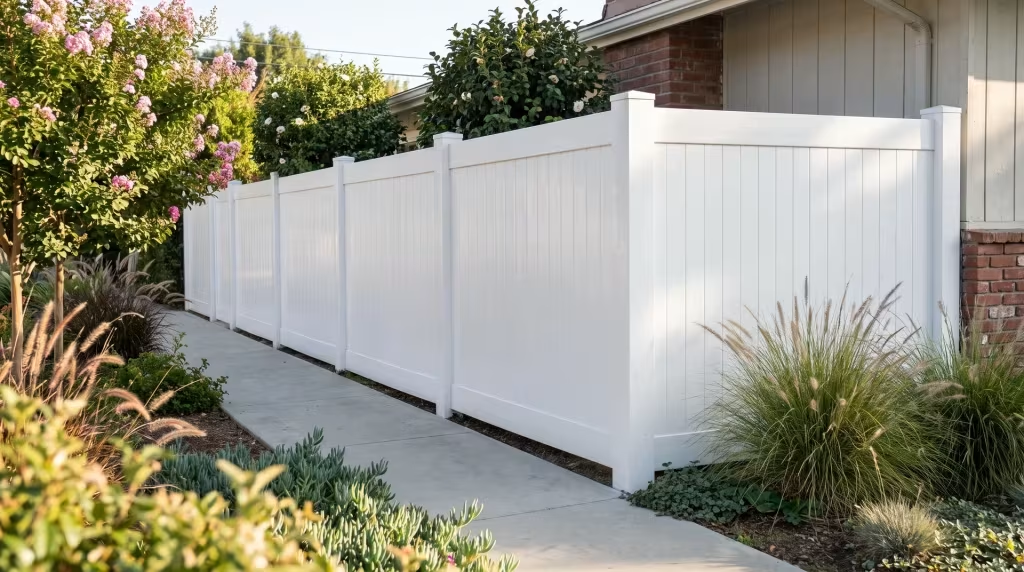
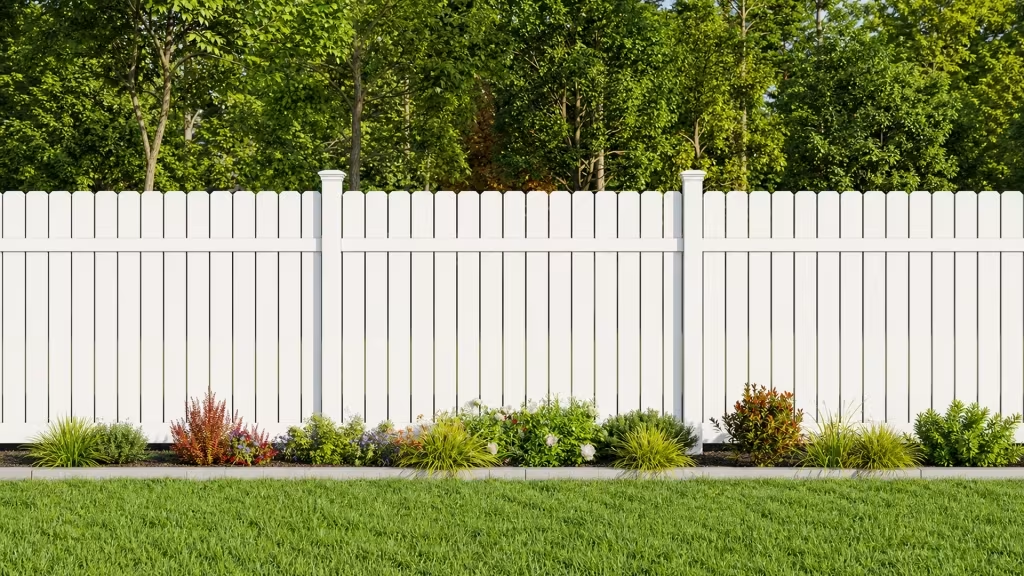
Pickets stand upright with an even gap between them, and each one passes up through the top rail to stand exposed above it. A cap goes on every top. The line across those tops holds level the whole way. It stands 3.5 or 4 feet.
A run measured on your ground, built to that footage, and set by our own crew, in Greater Los Angeles and the Bay Area alike. We install and fabricate as a licensed company, 2,000+ finished projects behind us, 500+ five-star reviews at 5.0.
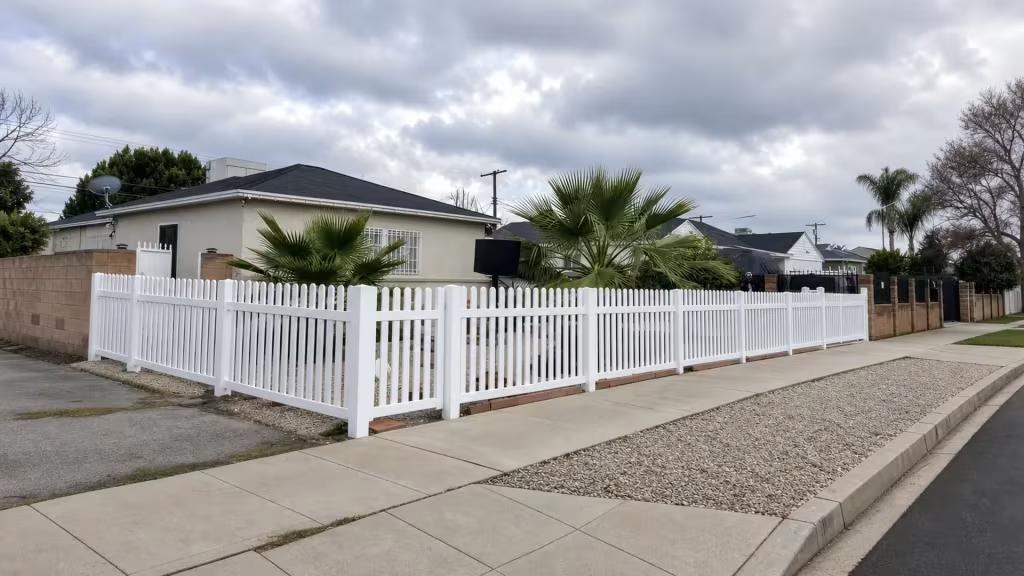
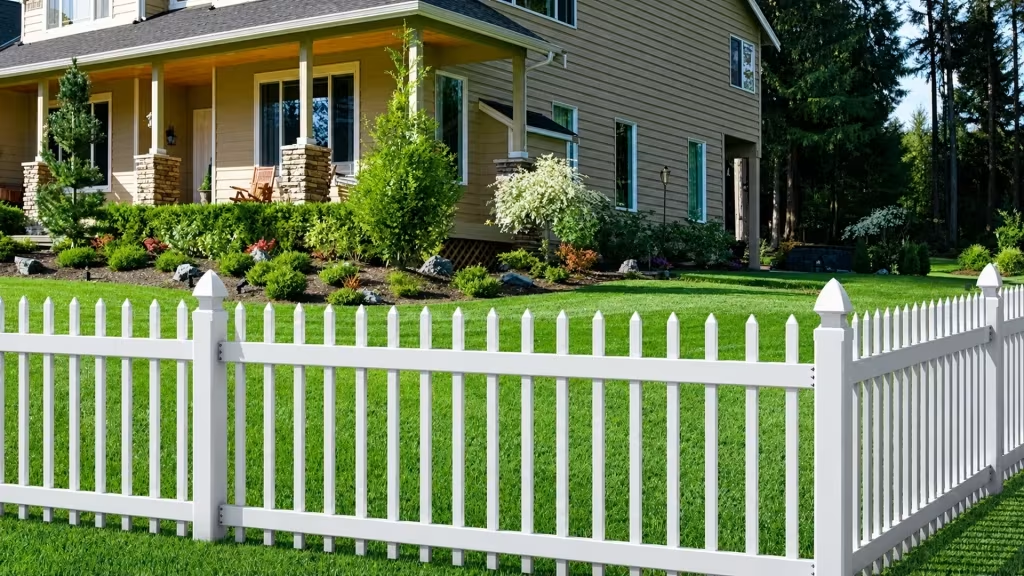
Of the picket styles, this is the one that holds a level top line. And we size the run to your footage and stand it ourselves.
Buying a panel and buying a run are two different purchases. Here you are buying the run, which is why slope, footings and the line itself land on us. And where this fence is the wrong pick, you will hear that too.
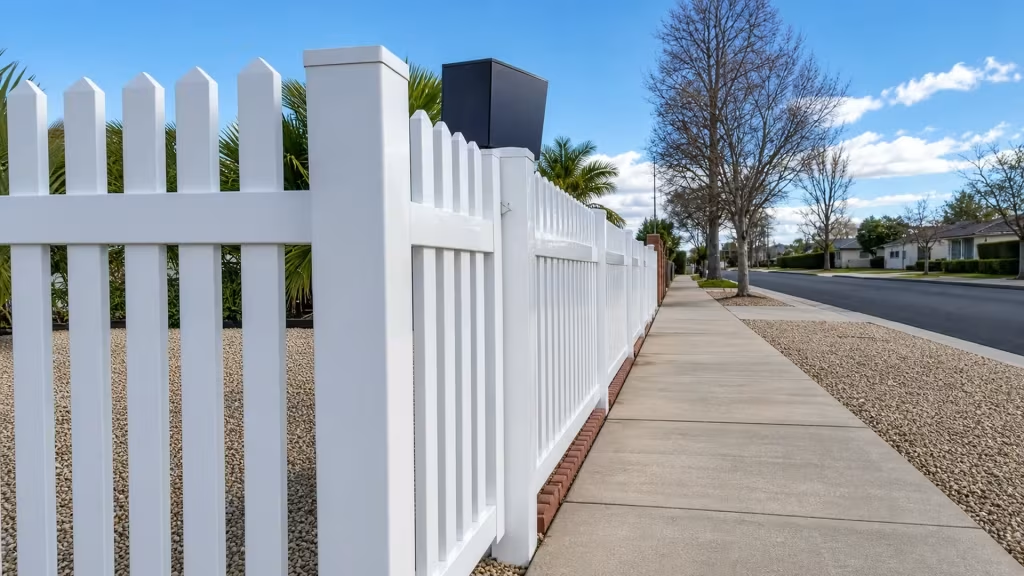
Straight names the run line: the line the picket tops draw across the yard. Here it holds level, first post to last.
The cap on each top is a separate decision, which is why a run can be straight and dog-ear at once. Shaped alternatives bend the line: arched climbs to a crown mid-section, scalloped dips to a low center. Ask for the opposite of a scalloped fence and this level line is it. Sideways pickets are the horizontal style’s question.


The pickets do not stop at the top rail. They pass through it and carry on above, so the tops sit exposed, each under its own cap. Ten pickets to a section, ten caps.
Pickets measure 7/8 in by 3 in across a 69 in section, on posts of 5 in by 5 in under External caps. A cap is a separate piece fitted over the picket top. Dog Ear ships as standard on our Queensgate panel; External, Gothic, Internal, Internal Flat and Spade suit the same picket, and any can be installed.
That exposed, capped top is also what separates this fence from the vertical style, whose pickets stop at the top rail and go no further. The rail closes them off, so no picket caps go on.
A run line goes up before the first post does, and everything after is held to it.
Post length is part of the job: a 42 in fence stands on 66 in posts, a 48 in fence on 72 in posts, each set plumb to that line, in footings dug to match. That is what stops a top line from waving. The bottom rail, 2 in by 3.5 in, keeps a 69 in section from sagging between posts, and on Clay and Tan panels it carries a metal insert. Looks vinyl from outside, but there is metal inside.
On graded ground you get one or the other: a level top line, or a bottom that stays tight to the ground.
Step the run and each section sits level between its own posts, raised or dropped against its neighbor. Every top edge stays horizontal, so the level look survives the grade. The cost is underneath: a triangular gap opens below the downhill end of each section, widening with the grade.
Rack it instead and the rails angle to follow the grade while posts and pickets stay plumb. The bottom holds tight to the ground while the top line travels with the slope. Our estimator makes that call on the lot, with a tape.
This style stands 3.5 or 4 feet, and the narrow band is no accident: it is what front yards are usually allowed.
A level line makes the height one number for the whole run, which is the number the limit applies to; a crowned or dipped line is measured at its tallest point. Front-yard caps across the cities we serve sit in that 3 to 4 foot band, with the figures in the tabs below. Confirm the limit for your address; an HOA can be stricter still.
Gaps are the point of a picket run, and they rule it out of two jobs.
It cannot serve as a pool barrier. California’s standard allows no gap a 4 inch sphere could pass and no more than 2 inches of clearance beneath, and it requires self-closing, self-latching gates. Height settles it anyway: pool barriers start at 60 inches, above anything this style reaches.
Screening is the other: a hidden yard is a privacy build. Small dogs come down to gap and height together, so ask rather than trust a promise.
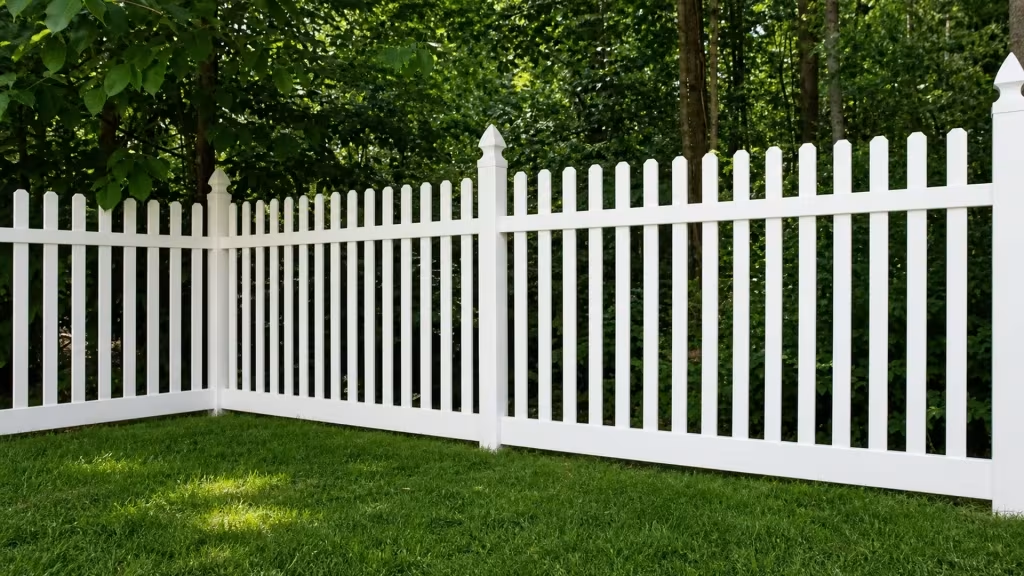
What gets ordered is a run, built to size: custom heights, widths and proportions.
A matching gate repeats the color and the cap style, metal frame under vinyl cladding, and it carries no motor. The material side is the transferable limited lifetime warranty, with 5 years from us on the labor.
Footage, height, ground works, old-fence removal, gates and yard access move your number. The figure comes from the visit, which is free.
Run your eye along a level top and the color travels the whole length with it. This style keeps to three: White, Tan, Clay. Pigment sits inside each board instead of on the face, so a rail scuff shows the same tone underneath rather than raw white. No paint, no stain, no touch-up.
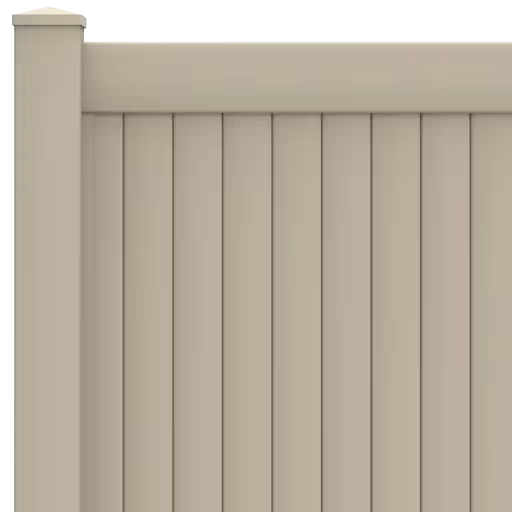
A level top line is one profile we cut. We also build the taller solid runs, the scalloped and arched tops, and the gates sized to match whatever stands beside them. Same shop, same crew setting the posts.
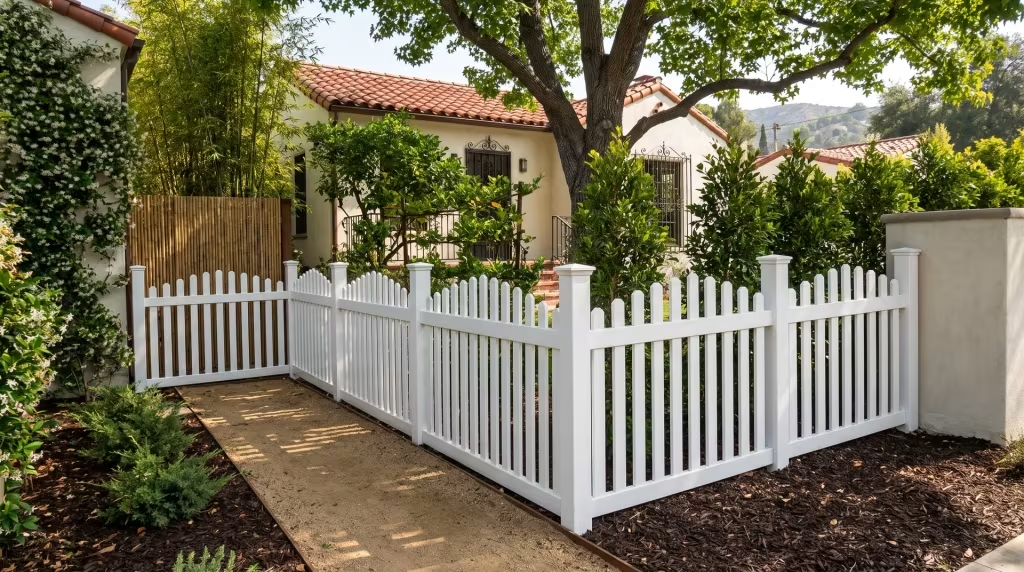
Arched picket tops climb to a gentle crown at the center of each section instead of running level.
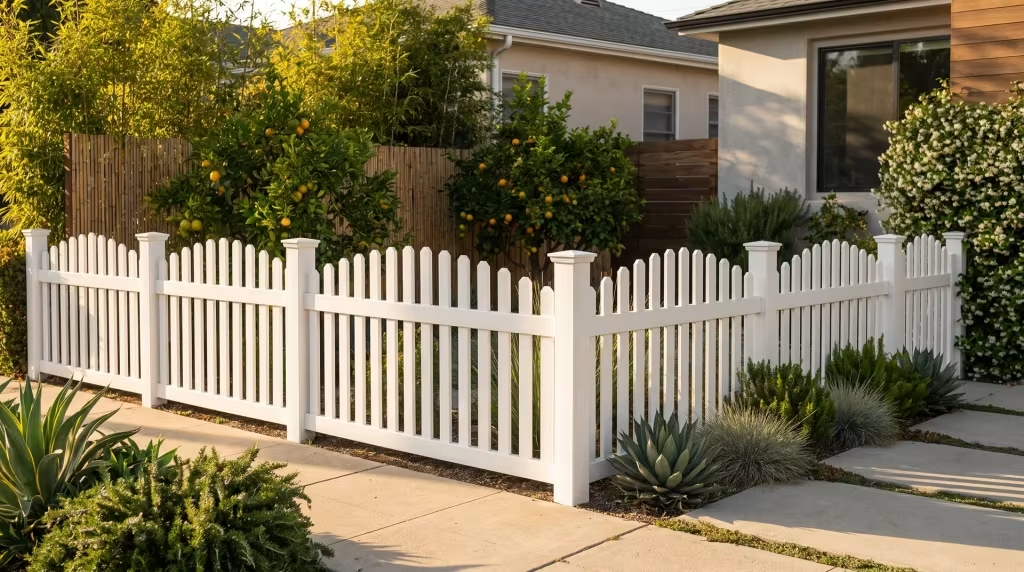
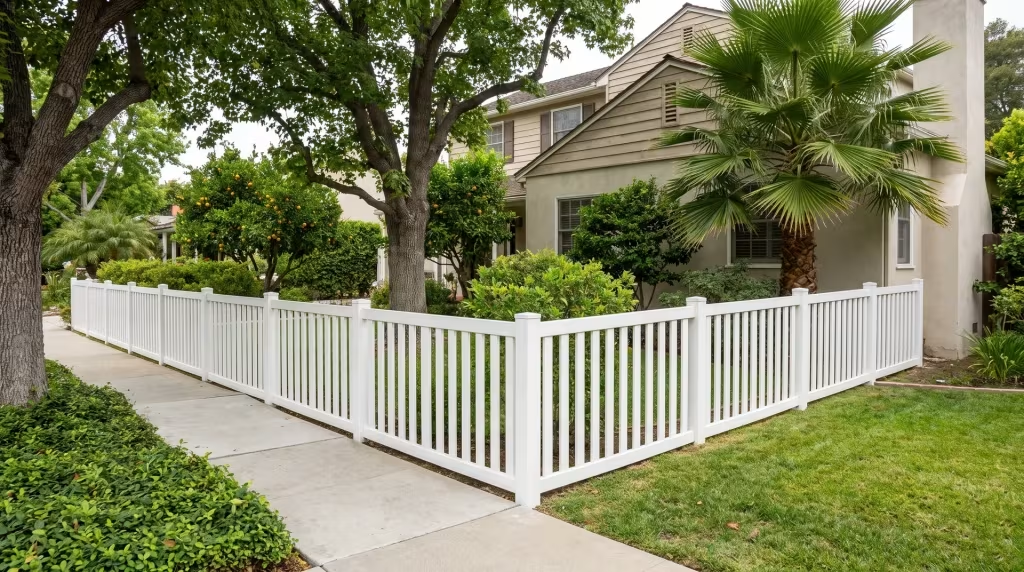
Closed-top pickets sit flush under a top rail for a finished, level line, with the gaps between boards left open.
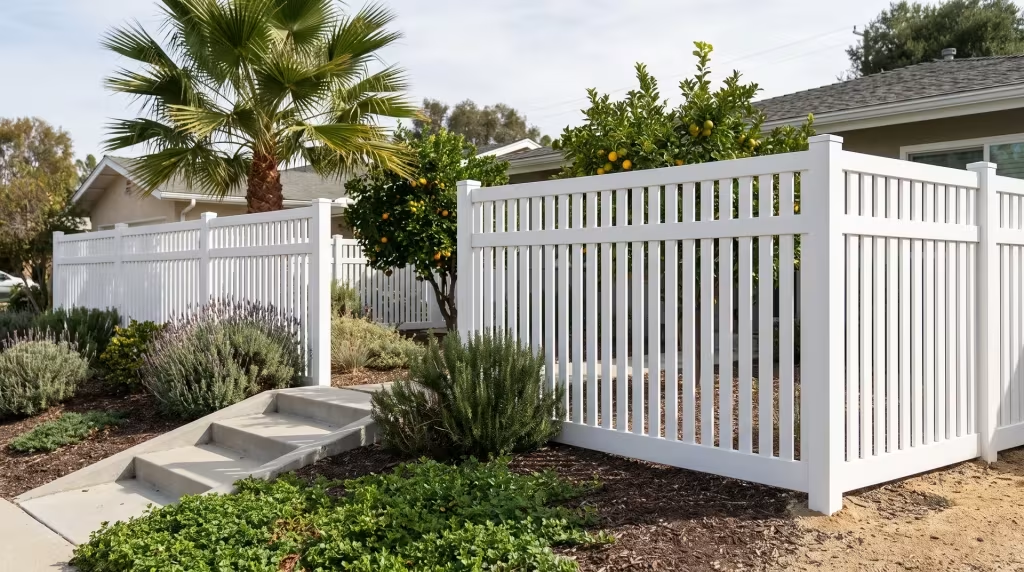
Dog-ear pickets run up through the top rail and stand exposed above it, each one wearing a molded cap.
Horizontal pickets run flat boards side to side instead of standing upright, open enough for light and air to pass.
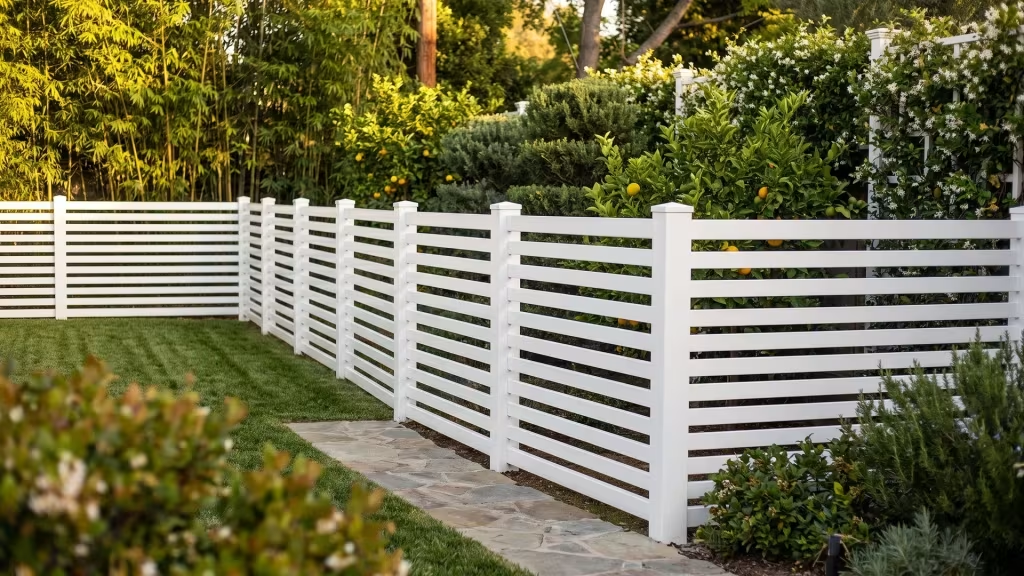
Scalloped picket tops dip into a soft scoop at the center of each section and rise back up at the posts.
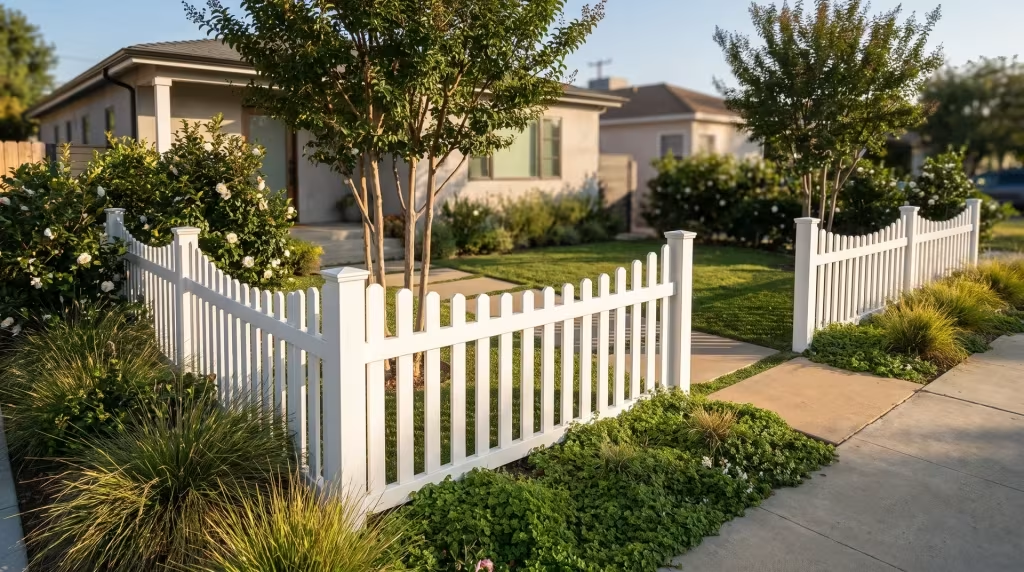
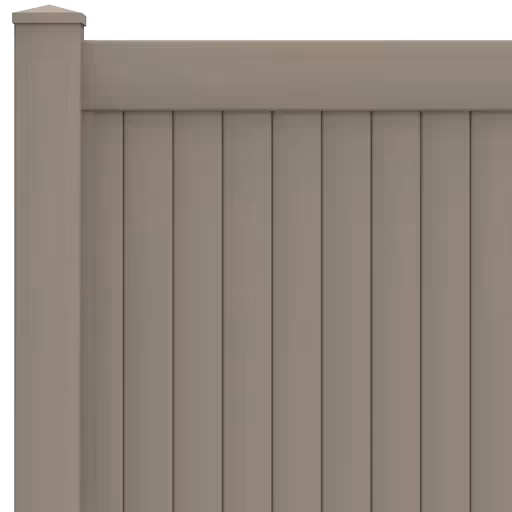
Pickets stand upright and stop clean at the top rail, the closed-top spacing behind the classic white-picket look.
David at Pro Vinyl Fencing did an excellent job installing our Vinyl gate. Took the time to make sure everything was level and lined up. Thank you Jasmine for all your help and attention to making sure everything was what we expected! My wife and I highly recommend Pro Vinyl Fencing.

Working with Nairi on our project was very professional. We were quoted a price and impressed by the cost, which was lower than our other bids. It was a 2 day project and was completed as promised. I would highly recommend using this company, they are very courteous and based on customer satisfaction!

I had a delightful experience with this company. Customer service was exceptional and the quality is great. Everything was explained to me. I liked that I wasn’t rushed with my options and I loved the ease of everything. I highly recommend them!

We had a great experience with this company. They were great to communicate with and had really good prices compared to others. The job was done fast and cleanly.
Vardges came to install our fences, and even though the summer heat was at its peak, he finished the installation so well without any issues. I highly recommend this company.

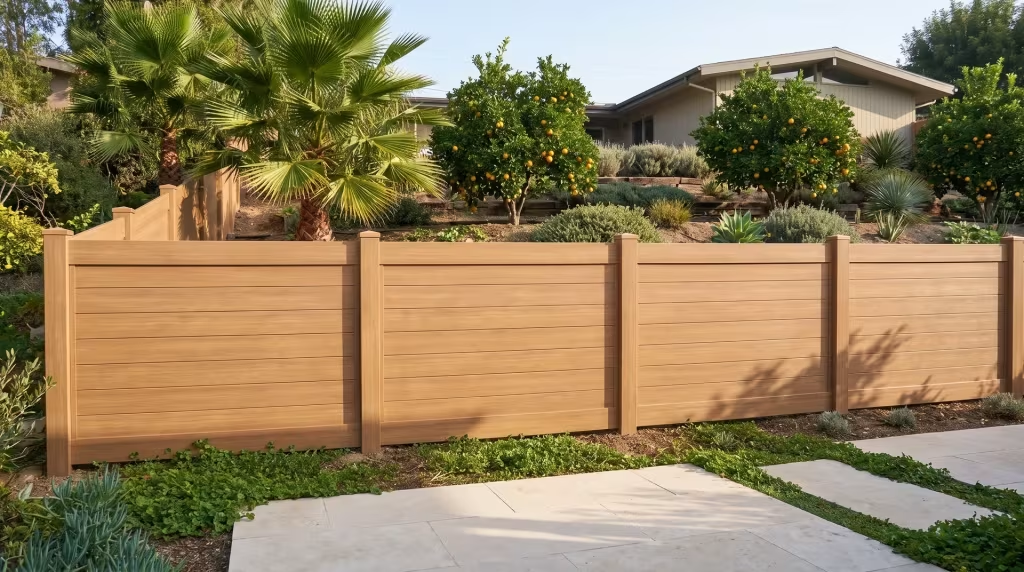
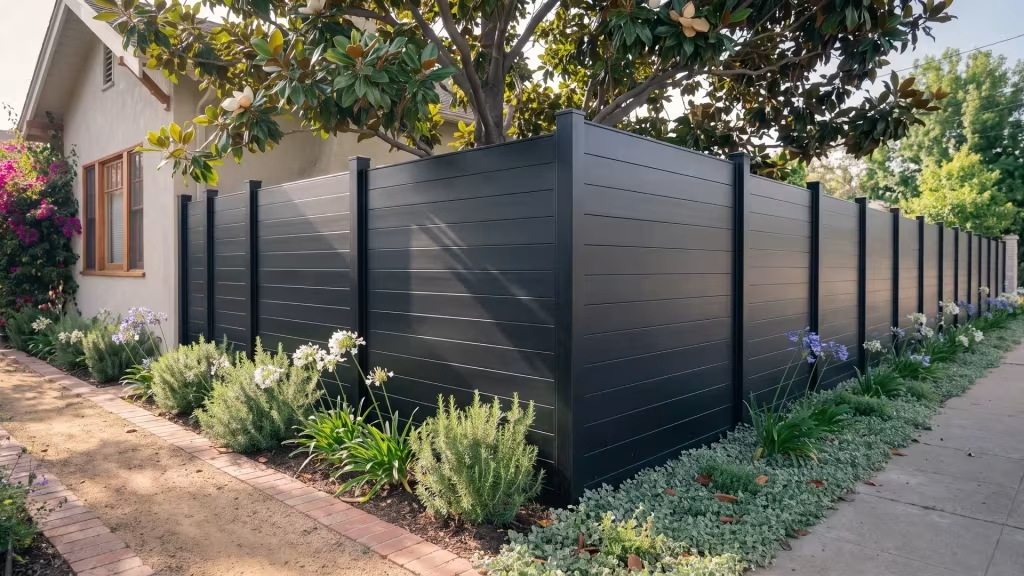
Sight down the top line in these photos the way you would standing in a yard. Then look at where the run meets the ground, because that is usually where a level line is won or lost. Both markets we serve are in here, and the lightbox opens every shot full size.
Front-yard height decides this style before taste does. The City of Los Angeles caps a front-yard fence at 42 inches (LAMC 12.22 C.20(f)); Glendale allows 4 feet in the front and street-side setback; Ventura County runs about 3 to 4 feet in front yards. Verify your address with the building department.
Bay cities write their own numbers. San Francisco holds a front-setback fence to 3 feet, or 6 feet where it is at least 75% open. Oakland allows 42 inches in the minimum front and street-side yards, San Jose 3 feet in the front yard. Elsewhere the figure varies, so check your city planning division.
Our estimator comes out, measures the run, reads the ground and prices the job. You can have a ballpark over the phone, and that is fine, but the real number needs somebody standing in the yard. Ask on a working day, hear back the same day.
No surprises in the middle: we settle footage, color, cap style and date before anything is built.
A free visit on your property: we measure the run, read the ground and answer the slope questions on the spot.
In writing before anything starts: footage, height, color, cap style, plus removal and haul-away of any old fence.
Our crew strings the line, sets each post plumb to it, hangs the sections, then fits the caps. Order is what holds it.
Site cleaned, a walkthrough with you, then the cover: limited lifetime on the material, 5 years from us on the work.
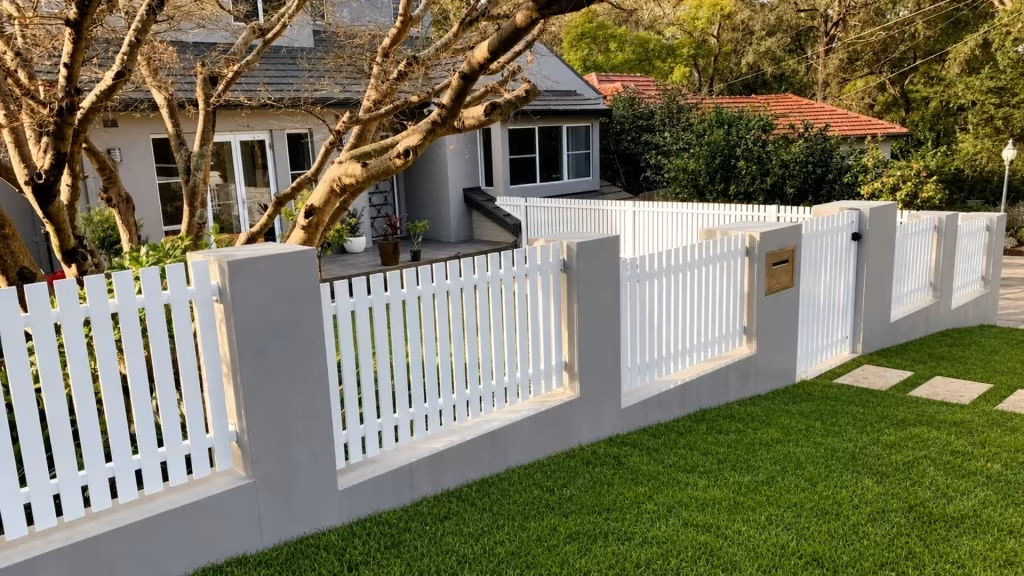
Guides below on picket styles, heights, slopes and what a finished run usually involves. Have a browse.
Three-rail ranch fencing brings a rustic look to a Los Angeles property built to take rough weather in stride.
Fences blog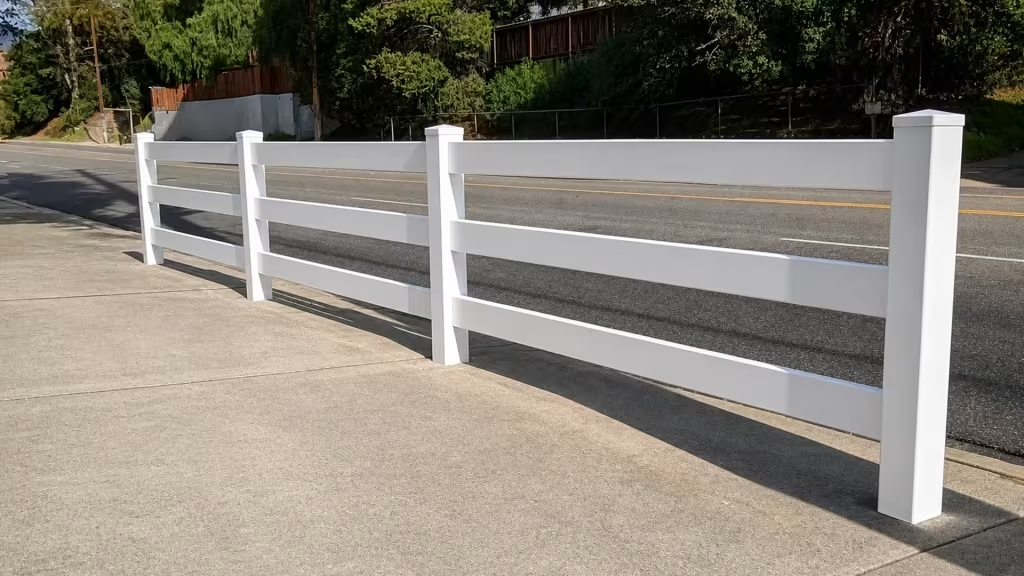
Straight pickets: what homeowners ask first
These six come up on just about every measure visit for this style, so we answer them here the way an estimator would answer them standing in your yard. Anything they miss, ask about it on the visit itself, which is free and carries no obligation either way.
Still weighing options?
Send roughly what your run measures and we come out and price it.
The top line. Straight names the line the picket tops draw across the run, and on this style that line is level end to end.
The cap on each picket is a separate choice, which is why a run can be straight and dog-ear at once. Arched and scalloped bend the same line up or down.
On this one the picket tops stand exposed above the rail line and every one carries a cap. The vertical style closes its top line with a rail and wears no picket caps at all.
Both stand the pickets upright; what differs is the treatment at the top. That closed top is the vertical style.
Only where the run is stepped. Each section then sits level between its posts and steps down with the grade, which keeps every top edge horizontal but opens a triangular gap under the downhill end.
Rack it instead and the bottom stays tight while the top travels with the slope. We choose on site.
Yes. Dog Ear is what the panel ships with, and External, Gothic, Internal, Internal Flat and Spade fit the same 7/8 by 3 picket, so any of them can be installed on your run.
Pick the cap when you pick the color and the height.
On an ordinary yard fence, no California state rule sets the gap between pickets; where spacing rules exist, a city wrote them.
The strict figures, no gap passing a 4 inch sphere and 2 inches of ground clearance, belong to pool barriers, which a 3.5 or 4 foot run cannot be. Verify locally.
Not in a way you can price from a website. Style is one input, but footage, height, ground works, removal of an old fence, gates and how easily a truck reaches the yard are what set the number.
The estimate is free and it comes with the real figure.