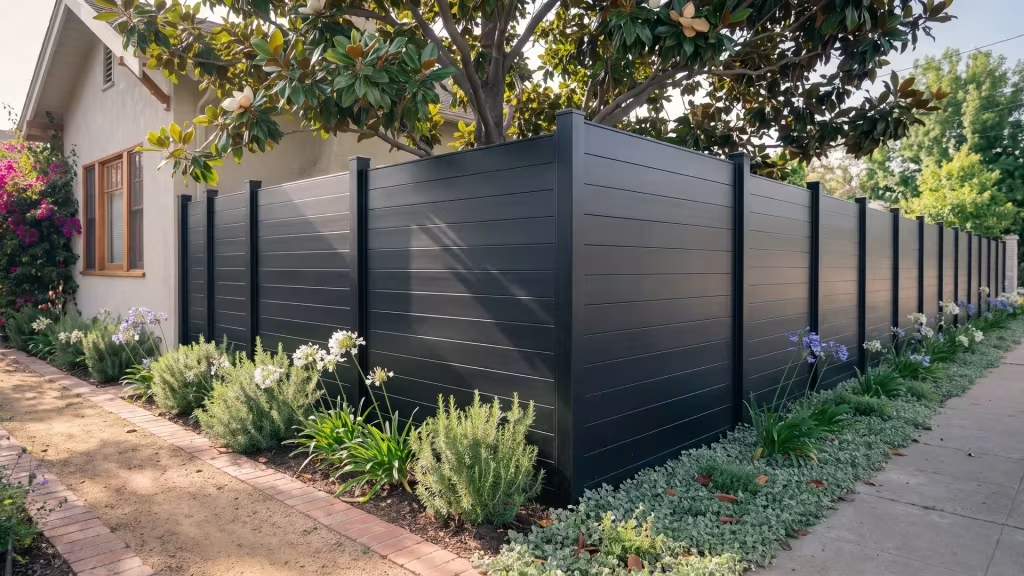
Aluminum Driveway Gates
Aluminum driveway gates, welded to your exact opening and offered as swing, slide, or cantilever.
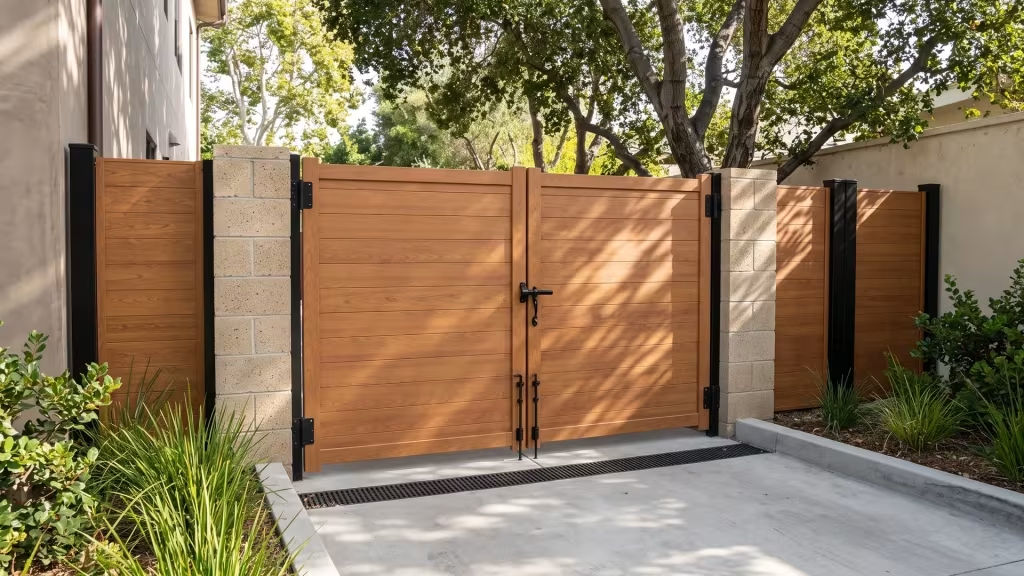
Call Now: (844) 744-0707
A rolling gate opens sideways instead of swinging. Running parallel to your fence on a ground track or up on posts, it never needs a swing’s arc, and we weld ours from rust-free aluminum to fit your opening.
There are two ways to build a roll. A V-track rides a ground rail; a cantilever floats on posts with no track at all. Each one buys you something and costs you something, and because we build both, the advice you get fits your driveway, not a pitch for the only system we stock.
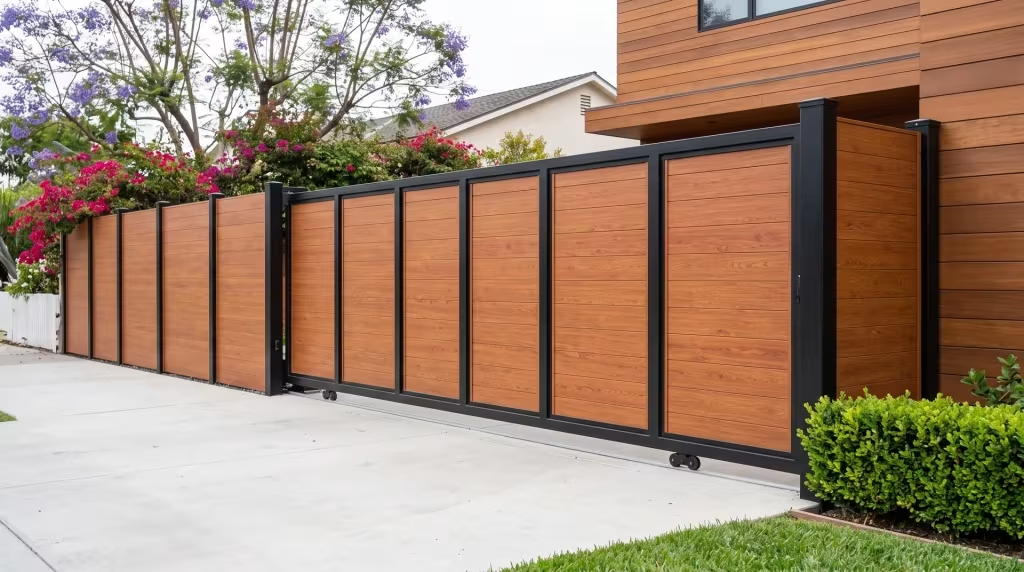
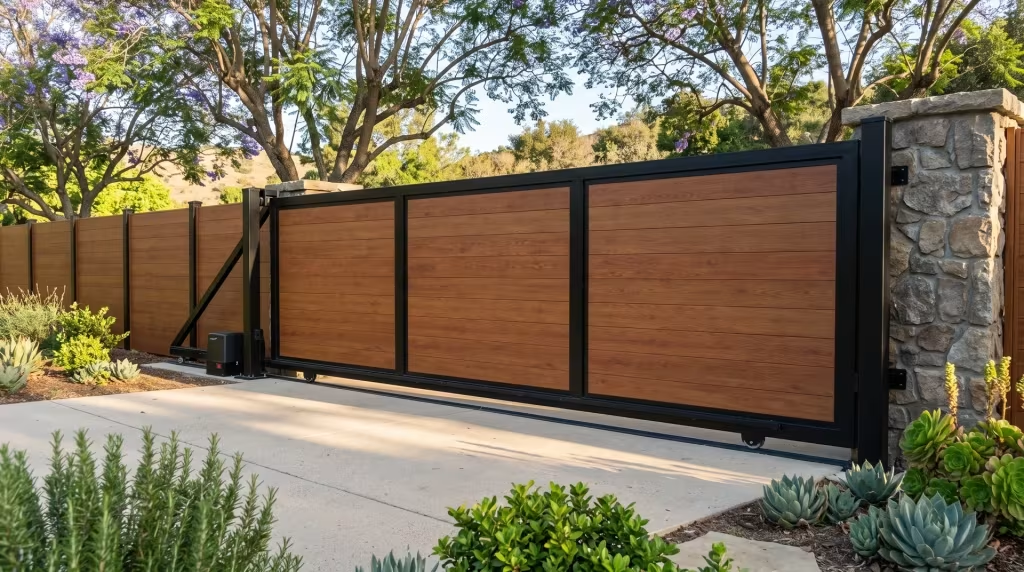
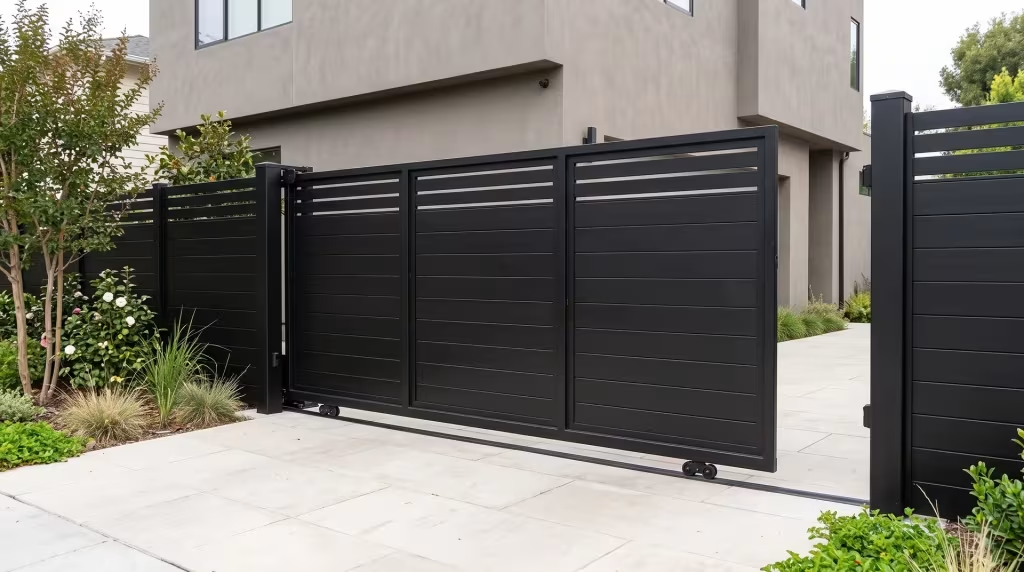
A rolling gate saves the arc space a swing needs, so it suits a wide entrance or tight approach. Ours are shop-welded and hung on site.
The question isn’t whether your gate rolls. It’s how. One system runs on a track set into the driveway; the other hangs off posts and never touches the ground. Slope, surface, and side room decide which one you want.
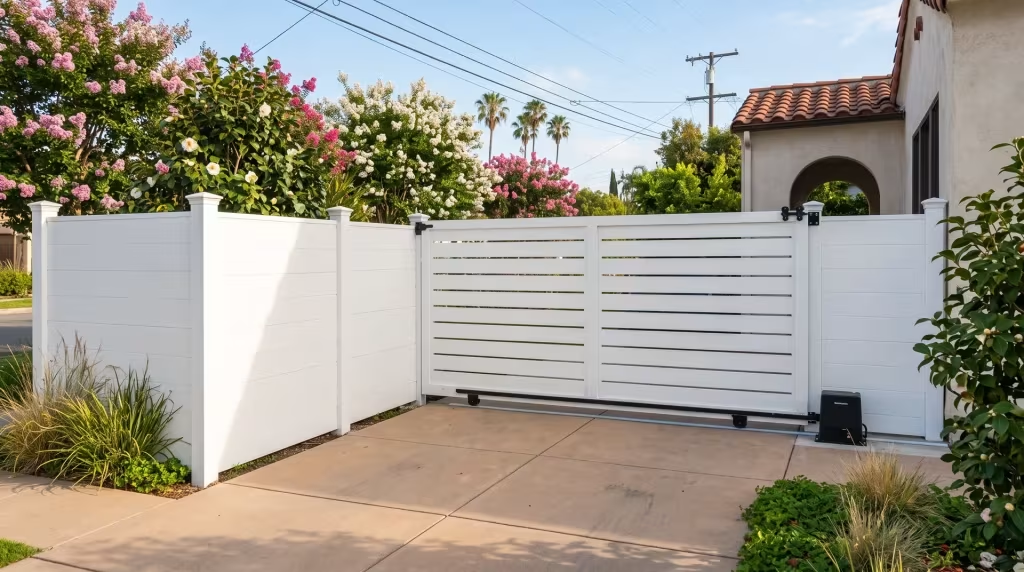
A rolling gate travels sideways, parallel to the fence, so it opens without a swing arc. That suits a wide entrance, a short driveway where a swing would hit a car, or a slope that binds a hinged gate.
It is not right everywhere: a roll needs firm, level room to one side, the full opening width. If you have swing room and a flat approach, a swing gate is usually simpler and cheaper. Swings belong to the driveway gate; the aluminum gates family sorts the type.


Choose a V-track if your driveway is flat, paved, and drains well; choose a cantilever if it is sloped, gravel, uneven, or snow-prone. A V-track carries its weight on the ground: a steel track sits at the opening, V-groove wheels ride along it, and a top guide holds the gate upright so it cannot lean off.
A cantilever never touches the driveway: two posts on the storage side carry roller trucks that grip the frame, and a counterbalance tail keeps its weight over the trucks so it floats above grade.
| System | How it works | Best when |
|---|---|---|
| V-track (ground track) | V-groove wheels ride a steel track at the opening; a top guide holds the gate upright | Flat, paved, clean, well-drained drives; the lighter, lower-cost build |
| Cantilever (no track) | Roller trucks on two posts carry a counterbalanced gate that floats above grade | Sloped, gravel, uneven, or snow-prone sites; nothing on the ground to maintain |
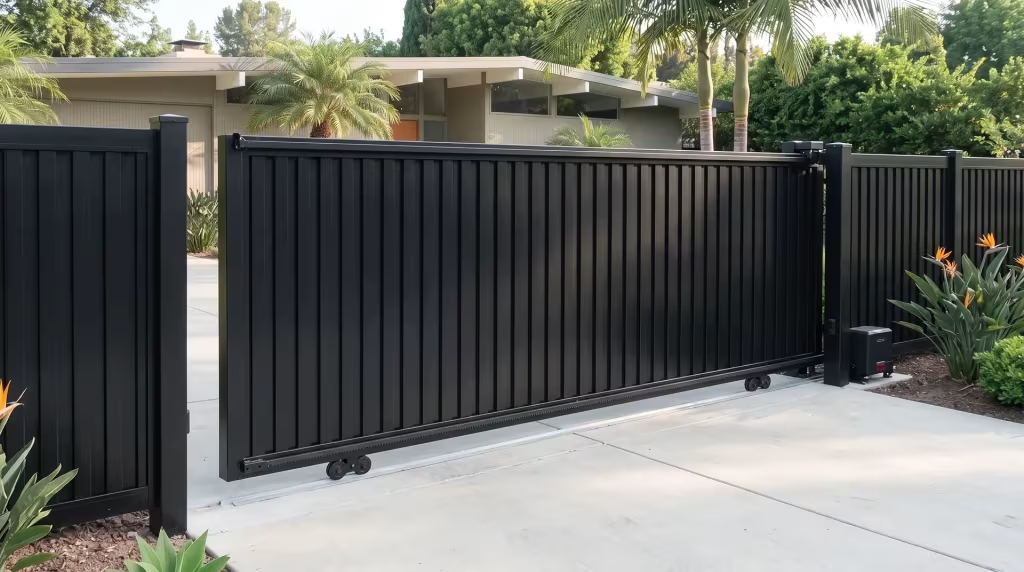
The honest downside of a V-track is the track itself. Set at grade across the opening, it collects leaves, grit, and water, can freeze or corrode, and gets driven over daily; left uncleaned, it sticks and the gate drags. That does not make it a bad gate: a V-track just wants a flat, paved, well-drained spot and an occasional sweep. A cantilever sidesteps all of it because nothing rides on the ground, which is why it costs more to build.
Measure the storage side, not just the opening, because a roll parks its whole panel there. A V-track gate runs about the clear opening plus roughly 3 feet for the operator. A cantilever runs longer, about one and a half times the opening, because a counterbalance tail reaching 30 to 50 percent past the posts keeps its weight over the trucks. Skip that tail and the gate tips as it rolls clear. So we measure both first.
Every rolling gate is a welded 6063-T6 aluminum frame, powder-coated to match your fence. Hardware is sized to the gate’s weight: V-groove wheels and a top guide on a V-track, roller trucks and a counterbalance on a cantilever. Posts run 3, 4, and 6 inch square aluminum, with a 16-gauge steel insert only for a tall or high-wind gate. The published envelope reaches 12 feet; wider is a custom quote.
SleekFence is a premium American aluminum brand, and PVAF is an authorized installer and partner: their engineered material, our custom welding and install, all in modern architectural aluminum. That material carries a 20-year aluminum and 10-year coating warranty, backed by our own 5-year workmanship. Coastal salt and pool chemicals are excluded, and a documented six-month cleaning keeps coverage valid.
The price comes from the build, not a shelf tag: opening width, V-track or cantilever, concrete track work, height, color, and automation prep all move it. A real figure takes a short, free on-site visit. We build the gate automation-ready, but the motor and controls are your automation contractor’s trade, not ours, and the same holds on a driveway gate.
Height can trigger a permit: Los Angeles requires one for a fence or gate above 10 feet, and thresholds vary by city, so verify with your local building department. Aluminum is the premium pick and prices above vinyl.
A rolling gate crosses its own opening every day of its life, so the finish has to take handling. Powder coat bonds to the metal under heat instead of sitting on top of it as paint would. Slat styles carry black, white or wood grain. The contoured profiles run matte black alone.
A gate is one piece of a boundary. We fabricate the runs that meet it, the smaller walk-through openings elsewhere on the property, and the vinyl equivalents when a yard wants solid panel instead.
Aluminum driveway gates, welded to your exact opening and offered as swing, slide, or cantilever.
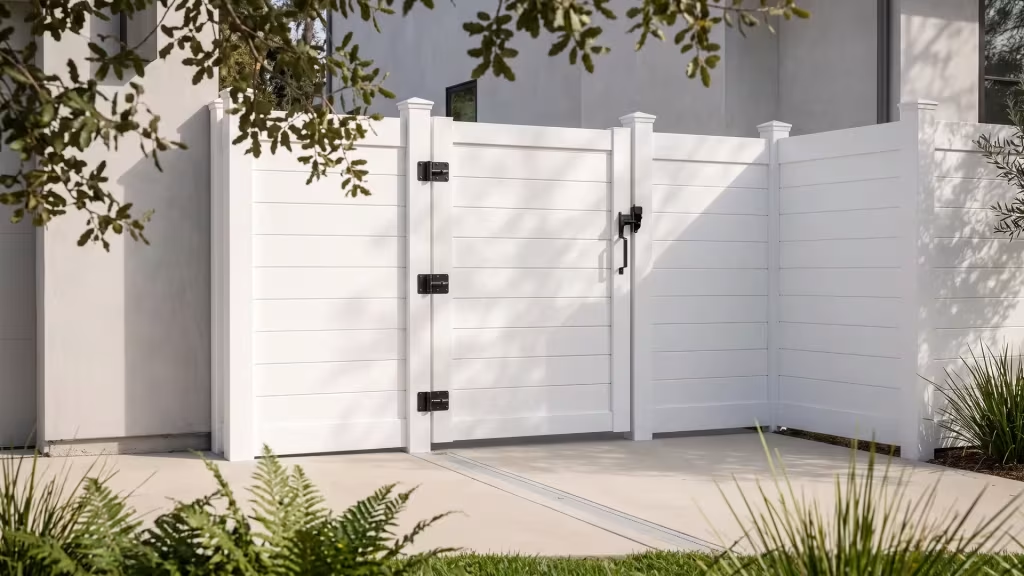
One welded aluminum gate leaf, sized for a side yard, pool enclosure, or front walkway.
David , Chris , Jasmine and the team are awesome. Low pressure, very competitive pricing,great to work with . I choose this group a year ago and called them back for additional fencing. Three neighbors have now used their services completely satisfied!

I googled a company for vinyl fencing. This company came up. They were responsive, out the next day, excellent pricing and ready to install in a matter of days. The instal was professional and clean, very easy company to work with. I would highly recommend contacting Nair, he will take care of you from beginning to end!!

They were timely, professional, thorough, and communicative. David who did the installation of the two gates skillfully installed them. Explained how the locks worked.
I asked him to make adjust the closing mechanism and he did and also showed me how to make the adjustment if needed in the future.

I called company and Jasmin sent out David, who was professional and did accurate measurements. I had toppers and easement gate installed. Chose walnut and even as special order everything was timely and no mishaps. They are clean, accurate and reasonably priced. Highly recommend!! I’m coming back for toppers on another wall of yard

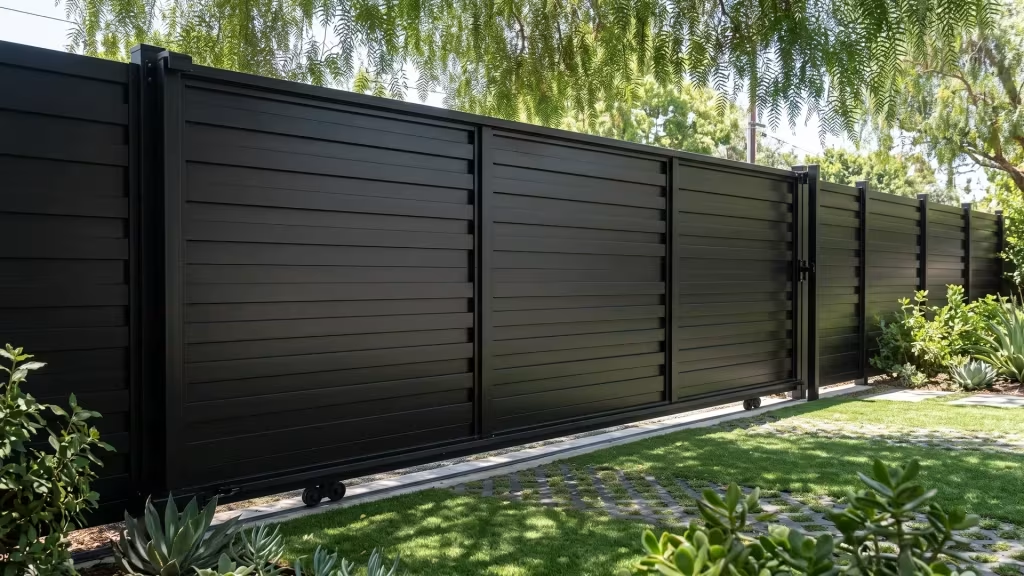
Each rolling gate you see here was welded in the shop and set on a real driveway by our crew, some on a V-track across flat ground, others as cantilevers where a rail would never lie flat. Look close and the custom work shows: the panel keyed to its fence, and a gate that rolls dead true.
All over Greater Los Angeles and Ventura County, our crew builds rolling and sliding gates, the V-track kind on level drives, the cantilever kind where a hillside won’t hold a rail. Best-rated locally, with 500+ five-star reviews. The crew fits V-track or cantilever to whatever your ground allows.
The Bay Area is still newer ground for us, so a rolling gate there gets the same welded build and crew as the gates we hang across Los Angeles. The team sizes up the opening and storage side, picks the V-track or cantilever the ground wants, and hangs it. Book a free estimate and a builder comes to look.
A rolling gate reaches a true-tracking install in four steps, and step one is where it parts ways with a swing: the crew measures the clear opening and, just as much, the firm level run-back beside it. That side room decides the whole build.
The same hands that measure your opening weld it and hang it, on one written contract. Same crew, start to finish.
A salesperson measures the opening and run-back beside it, reads the slope and paving, then picks V-track or cantilever.
You get the system, size, color, automation-ready prep, and warranty in writing before any aluminum is cut.
We weld the panel, set the track or the post-mounted roller trucks, then hang the gate and align it to roll true.
We back the build 5 years; a logged six-month cleaning of the track and rollers holds your coverage.
These guides walk through the V-track versus cantilever call and how to size the run-back before you build.
Vinyl gates give a Los Angeles property curb appeal and security without the upkeep wood or metal demands.
Fences blog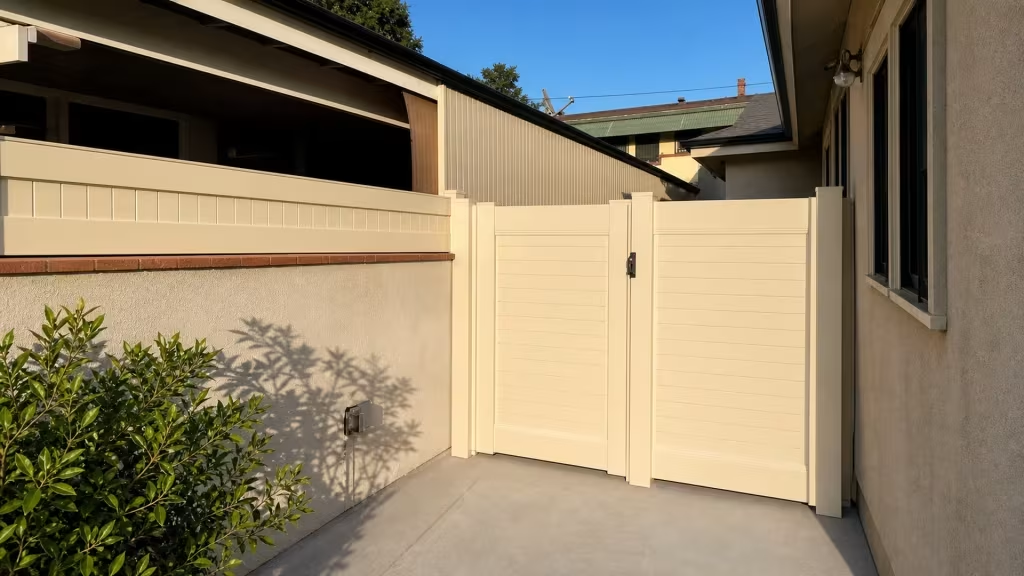
Rolling and Sliding Gate Questions, Answered
Before anyone signs off on a gate that rolls, the same handful of questions comes up: what a V-track really is, whether to pick it or a cantilever, the trouble each can bring, how much side room you need, and what it runs. The answers are here. Your exact build takes a short, free visit.
Still weighing systems?
Talk the two systems through with a builder and book a free estimate.
A V-track is a steel rail set across the opening at ground level, with a shallow V groove that matches the wheels under the gate.
Those V-groove wheels carry the gate’s weight and roll along the track, while a top guide roller or guide post keeps the gate upright so it cannot lean off the rail.
Match it to your ground. A V-track suits a flat, paved, well-drained driveway and is the lighter, lower-cost build.
A cantilever suits a sloped, gravel, uneven, or snow-prone site, since it floats above grade with no track to foul. We build both, so we fit the system to your drive, not to our shelf.
Most trouble traces to the ground track: it collects leaves, grit, and water, can freeze or corrode, and gets driven over, so a neglected track sticks and the gate drags.
The fix is a flat, well-drained spot and a regular sweep; a cantilever avoids it, since nothing rides on the ground.
More than the opening, since the gate parks its whole panel to one side. A V-track needs about the clear opening plus roughly 3 feet for the operator.
A cantilever needs more, about one and a half times the opening, because its counterbalance tail reaches back past the posts to stay balanced.
Yes, with a cantilever. Because it hangs from posts and floats above grade, a cantilever handles a slope, gravel, or an uneven surface that a ground track cannot sit flat on.
A V-track wants a flat, paved run, since its rail has to lie true on the ground for the wheels to roll clean.
A V-track is generally the lower-cost build: lighter frame, smaller hardware, though it needs concrete track work in the drive.
A cantilever runs more, with its heavier frame, roller trucks, and larger posts. We do not post prices, since the number turns on your site; the on-site estimate is free.