Aluminum Privacy Fences
Solid aluminum privacy fencing that closes the view completely, with no sightlines at all.
Call Now: (844) 744-0707
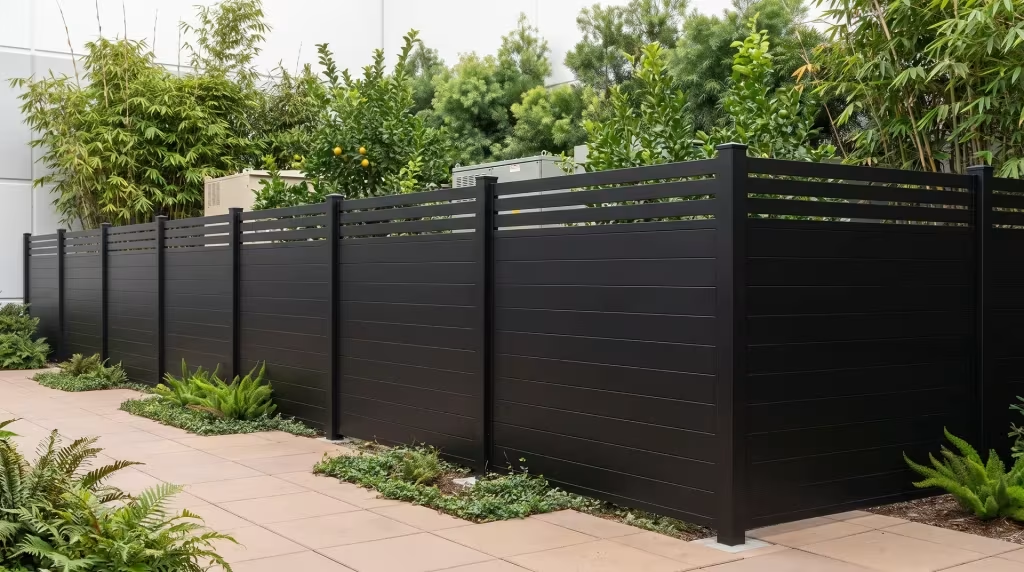
The lower part of this panel closes the view completely. Above it, the open picket band keeps light and sky in the yard. One panel, two zones. Powder-coated aluminum that never rusts and never wants paint.
Search this construction and you get stores shipping one fixed height in a carton. Our crew measures the run, builds the panel from 2 to 12 feet, and installs it. 500+ five-star reviews sit behind that work. Privacy comes from the solid lower body, so where it stops is what counts.
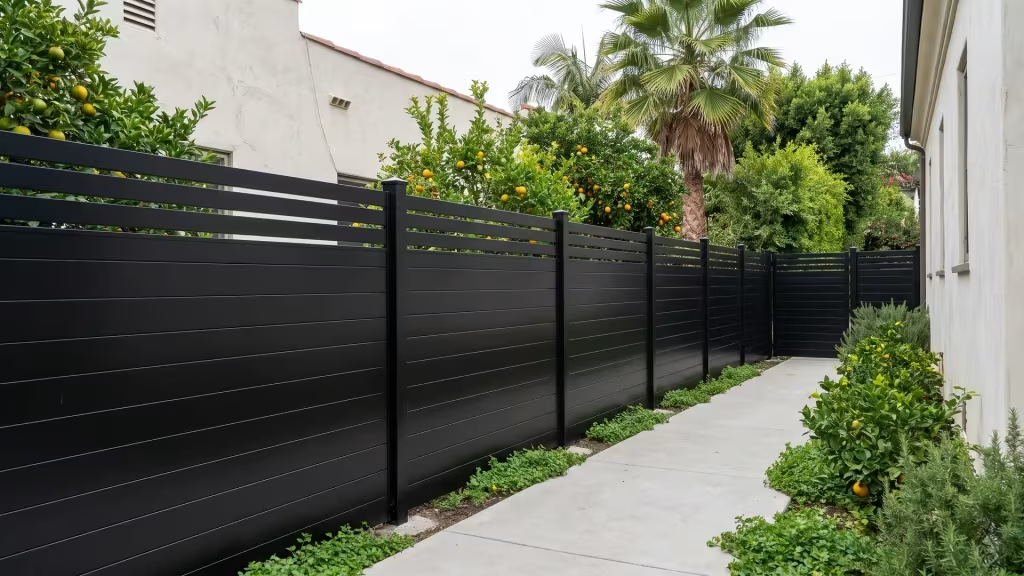
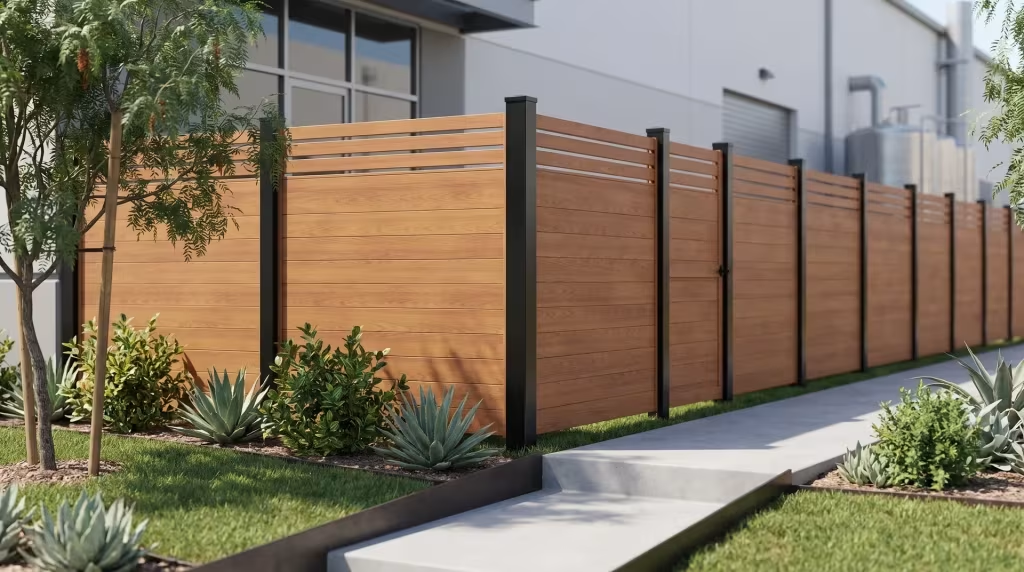
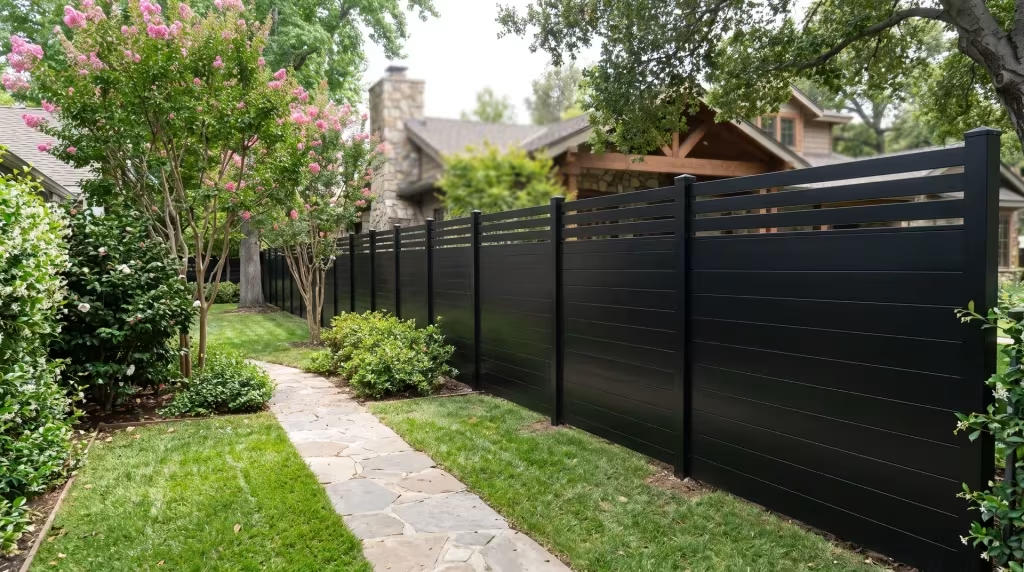
A solid lower body that screens the view outright, an open picket band above it, and both cut to the height your run needs.
Five things decide this one. How much each zone screens, and where the solid part has to stop. Why some California height rules are written around this shape. How it compares with the other two aluminum panels. And what moves the number.
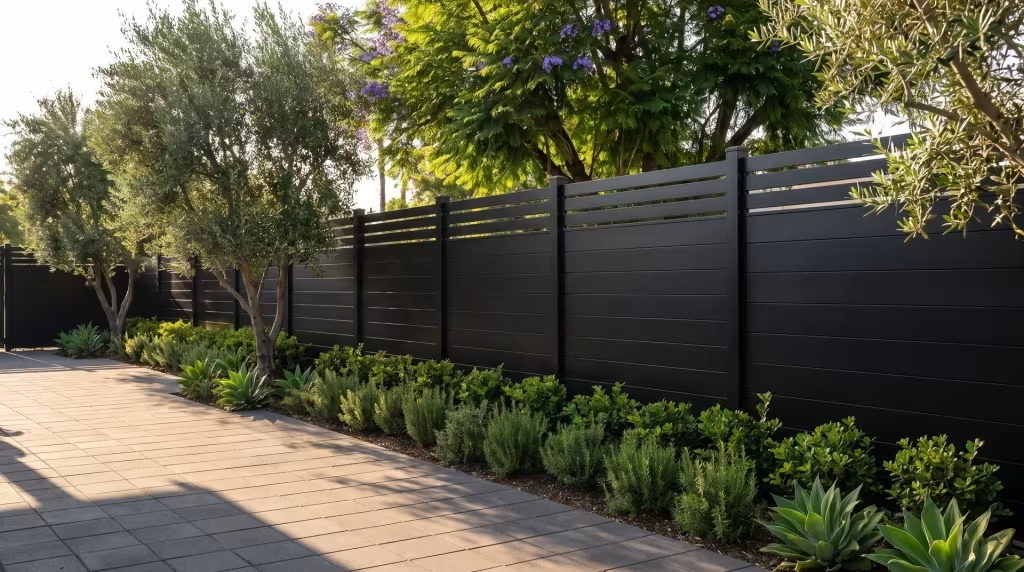
Two zones stack in one panel height. The lower body runs 6 inch interlocking horizontal slats with no spacing. It blocks the view outright, 100 percent. Above it, 3 inch slats spaced 3/4 inch apart screen roughly 80 percent while light and air pass. Picket here means the open upper band only, never the solid boards. Shapes and sky read through the top; the yard stays closed below. One pre-assembled 6063-T6 panel, heat-cured powder coat.


Eye level for most adults sits a little over five feet off the ground. Measured standing eye height is around 64 inches for men and 59 for women, so a solid zone stopping at four feet screens nobody standing there. The split line, not the total height, is the number to ask about, and it is not published: ask where it lands on the height you are considering. Want it closed from grade to top? That’s the full privacy panel.
Solid below, open above is a code shape too. Several California cities cap solid height, allowing more only where the upper part is substantially open. Glendale requires any portion above 6.5 feet to be at least 50 percent open (GMC 30.11.070).
San Francisco’s front setback: 3 feet solid, 6 feet at 75 percent open (Planning Code 136). Both show a pattern; a code’s open-area test is not what a panel screens. Rules vary by city, so verify with your local building department.
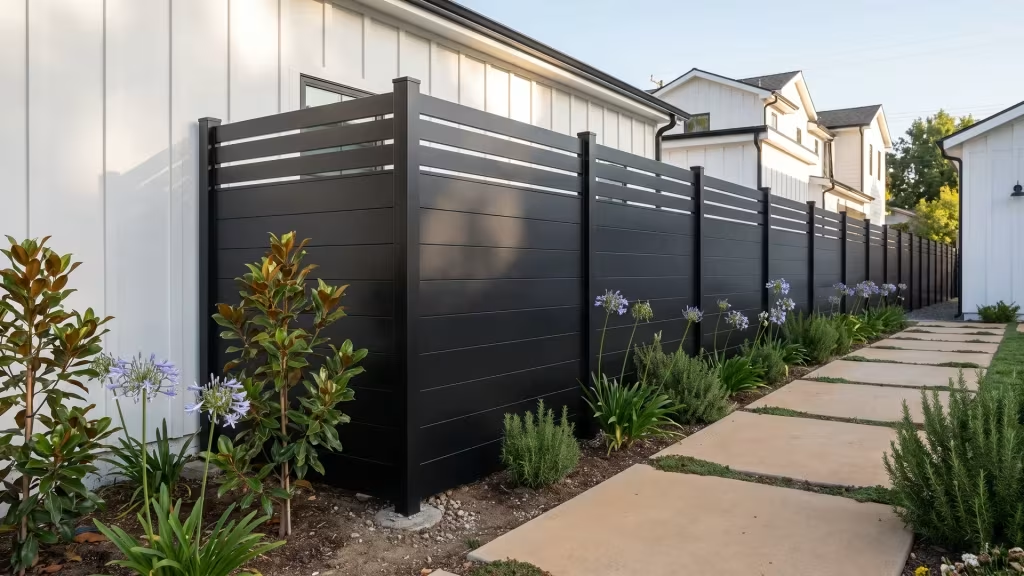
The open band runs 3 inch slats on a 3/4 inch gap; a semi-privacy panel runs wider 4 inch slats on the same gap. Narrower slat, same gap, so this top reads more open, roughly 80 percent against 85. Below the split, the lower body is the same 6 inch interlocking, no-gap build as a full privacy panel. Closed all the way up is full privacy; one value with airflow throughout is semi-privacy.
An open band carries less sail area than a solid panel of the same height. Solidity ratio, net solid over gross area, is the measure: ASCE 7 reads a fence above roughly 0.7 as a solid wall, below it as an open frame.
It does not produce a wind number for this panel. The rating tables run on height, wind speed, exposure and mounting, no column for openness. Tall or exposed runs take a 16 GA A36 steel insert inside the aluminum post; on a grade panels step down.
It starts with two slat profiles in one panel. Then comes the height the run reaches, how much of that is solid body, run length, gate count, posts and inserts, the ground, and whether an old fence has to come out first. Aluminum is the premium tier and prices above vinyl, a choice of look and budget. The real number turns up at a free on-site visit. Financing runs through Synchrony at zero down.
Off the shelf, an aluminum privacy panel comes as a fixed height in a box, 48, 72 or 96 inches. This one is made to order, 2 to 12 feet, with a typical yard run near 6 feet and a maximum panel width of 6 feet. Posts set into the ground or bolt onto a surface base. Matching pedestrian and vehicle gates ride on welded aluminum frames, automation ready.
Behind these panels is SleekFence, an American brand and a premium-class manufacturer of aluminum fencing. We are an authorized installer and partner.
The metal is modern architectural aluminum, carrying ASTM E84 Class A for flame spread and smoke.
Coverage: 20 years on the aluminum, 10 on the coating, 2 on steel components, plus our own 5 year workmanship. Coastal salt and pool chemistry sit outside it; a documented cleaning every six months keeps it valid.
Solid body and picket band take the same finish, so the panel reads as one piece rather than two stacked halves. Black, white and a wood grain finish are the whole range here, with no custom shades today. The coat goes on electrostatically and heat cures onto the aluminum.
Screening is a range, not a switch, and we build every point on it out of vinyl or aluminum: full runs, gates cut to match, toppers that raise a wall you already own, each made to the height your site needs.
Solid aluminum privacy fencing that closes the view completely, with no sightlines at all.
Close-set aluminum slats that screen the yard while still letting breeze and daylight through.
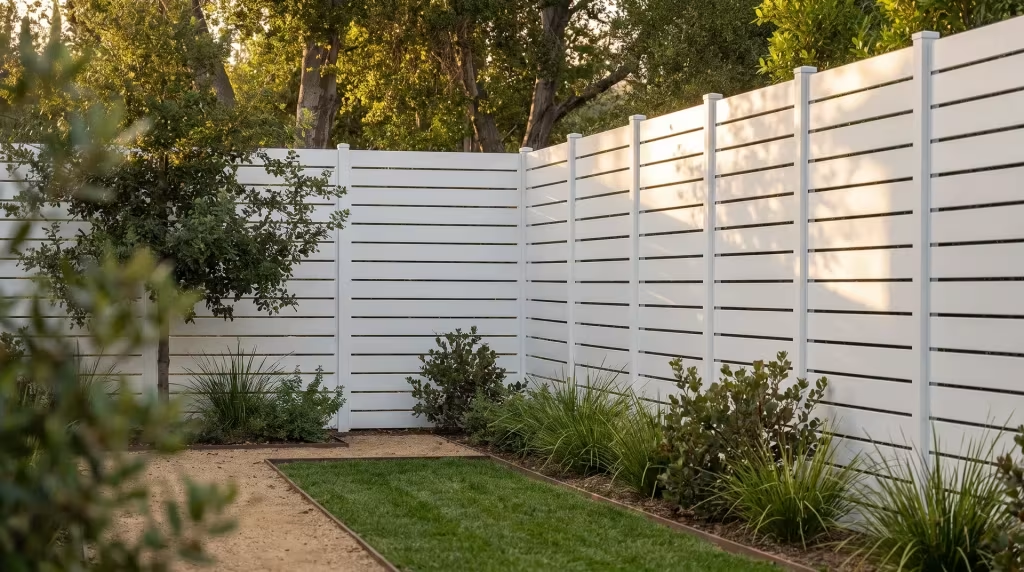
Nairi recommendations and follow through were excellent. Gagik, the installer, assembled the fence with craftsmanship. Fantastic end result. The fence looks beautiful and a great enhancement to our backyard. We highly recommend Pro Vinyl Fencing.

Pro Vinyl Fencing is an incredible family owned business that uses excellent materials and are master craftsmen in vinyl creations. We are extremely pleased with their quality work and installation skills. We will call them again for our next vinyl project. The Stoker’s

I am so glad I hired Giorgi at Pro Vinyl Fencing for the installation of my vinyl fencing, gates, and patio cover. They showed up on time, worked professionally, paid attention to all details and cleaned up after they were done.
Giorgi was very punctual at returning calls and very easy to work with. I highly recommend him and his staff.

Igor & Ruslan were incredible! We interviewed a bunch of other companies and we are absolutely thrilled we chose them. The work was done with precision and the fence looks better than I could have imagined. They were super collaborative and helpful and very kind. Would 100% recommend them to anyone.

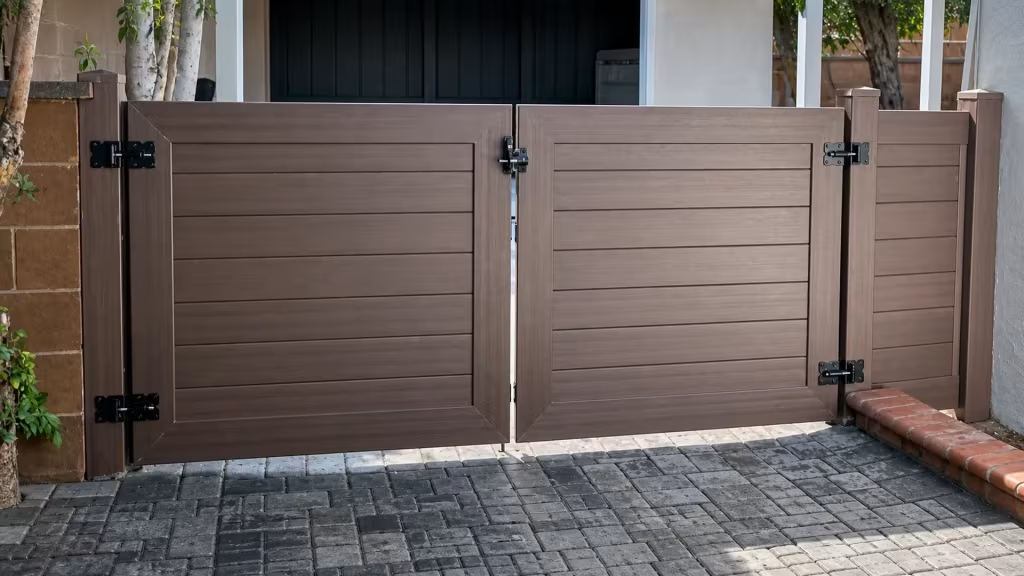
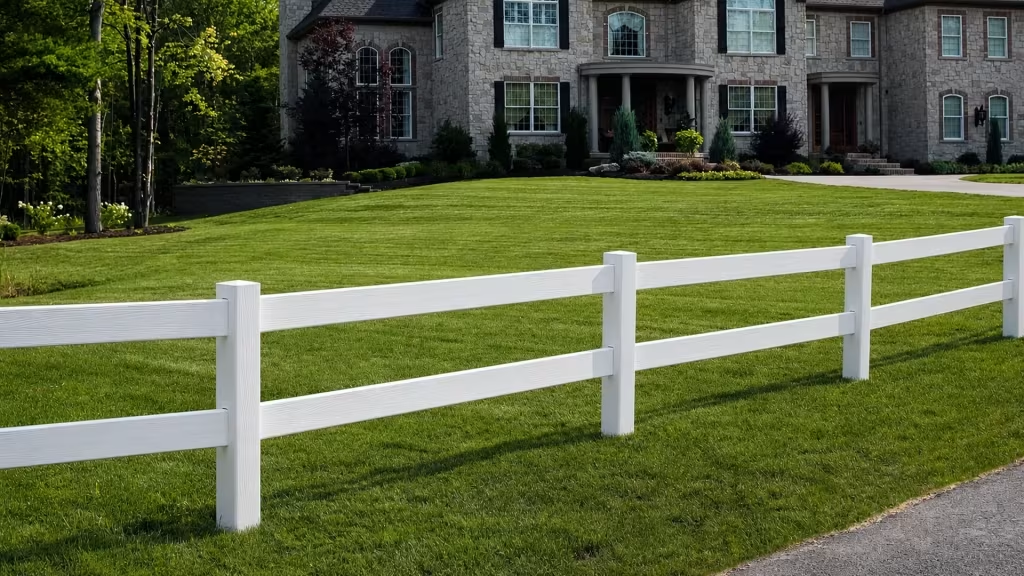
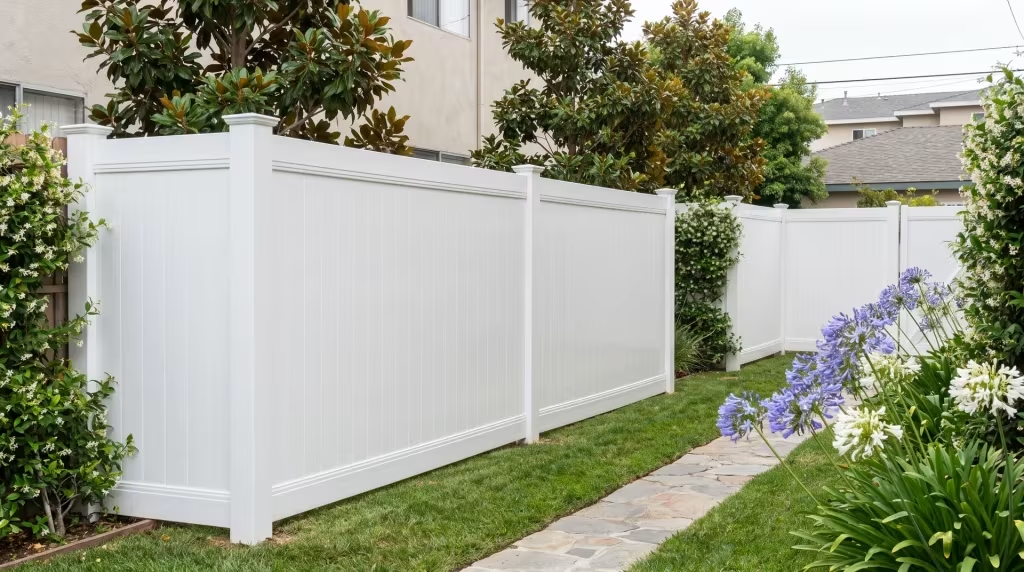
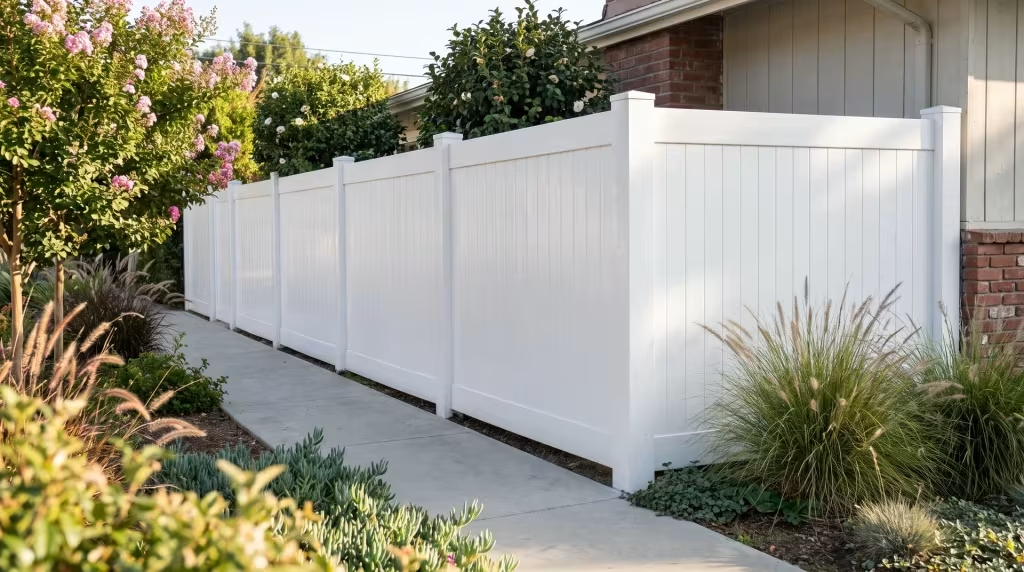
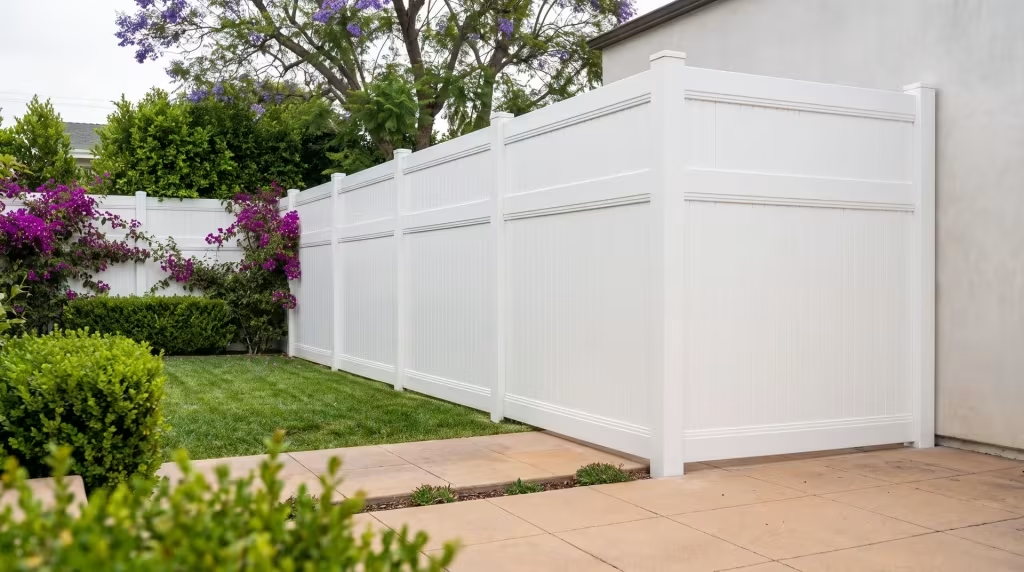
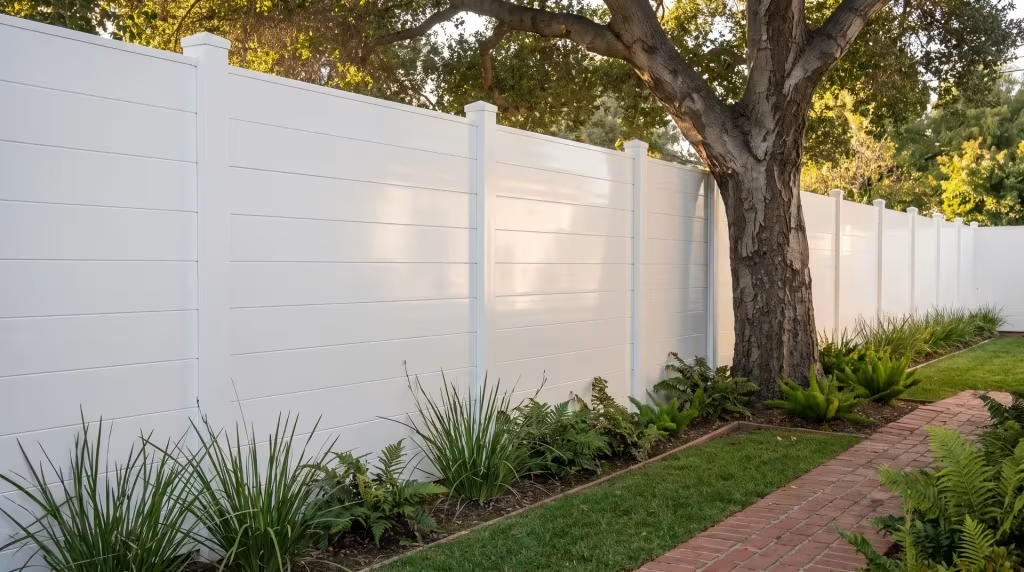
Each fence in the grid left the shop as a closed lower body with an open picket band on top, cut to the height that property called for and finished in wood grain, white or black. Boundary lines, street-facing runs, back yards. Both markets, all past work.
Greater Los Angeles is home ground. The crew works this market daily, with 500+ five-star reviews behind it. This panel usually lands where a yard needs closing at body height along a rear or street line, without a blank wall. In the City of Los Angeles, a front-yard fence stops at 42 inches.
Bay Area work runs through the same licensed company as the Los Angeles jobs, in business since 2018. We build every panel in house and install it with our own crew. Up north the front-setback and openness limits are written city by city, exactly the kind of rule a two-zone panel runs into.
One track runs from the first visit to the warranty. A salesperson measures and prices the run on site, the scope goes on paper, the shop fabricates and the crew installs, and then we register the warranties. Nobody digs until you sign.
No mystery line items. No vague dates. And the visit that starts the whole thing costs you nothing.
A salesperson walks the line, measures it, shows where the solid body lands against eye level, and quotes a firm number.
Heights, finish, gate count, posts and inserts, and the number all get written down before anyone is scheduled.
The shop cuts panels to your run. The crew sets posts, seats a steel insert where needed, and clears the site.
We register material, coating and workmanship warranties; a documented wash twice a year keeps the coverage alive.
Which screening level to pick, how city height rules read an open top, and keeping a powder coat clean.
Vinyl awnings block sun and rain for a Los Angeles property without the rust or rot metal and canvas covers pick up.
Fences blog
Picket-top privacy fences: the two-zone questions
Most of these get asked on site, at the property line, with a tape measure out. Short version. The closed lower body does the screening, the band above it does the light and the look. Where the line between those two falls decides what the fence is worth at that height.
Want yours measured?
Set up a free on-site visit and see what it screens at your height.
The solid lower body blocks the view outright, 6 inch interlocking slats with no spacing between them, 100 percent.
The band above runs 3 inch slats on a 3/4 inch gap and screens roughly 80 percent, so light and sky still come through up there while the yard stays closed lower down.
A little over five feet for most adults. Measured standing eye height is around 64 inches for men and around 59 for women, so on a 72 inch run the solid zone has to reach past those figures before it screens a standing adult.
Check where that line falls on the height you are considering.
At the top, yes. This panel’s open band uses narrower 3 inch slats on the same 3/4 inch gap as a semi-privacy panel’s 4 inch slats, so it reads more open up there, roughly 80 percent against roughly 85.
The difference is that everything below the split on this one is closed.
In several California cities, yes. Glendale allows extra height above about 6.5 feet only where that portion is at least 50 percent open, and San Francisco’s front setback reads 3 feet solid or 6 feet at 75 percent open.
Rules vary by city, so verify with your local building department.
Not an honest one. The rating tables run on height, wind speed, exposure and mounting, with no measure of how open a panel is, so no number specific to this construction exists.
Less sail area than a fully solid panel of the same height is fair to say; a figure is not. Tall runs get a steel insert.
No. The panel is finished as one, in one of three colors, black, white or wood grain, with no two-tone option and no custom shades today.
The coat is heat cured to architectural standards, so it holds its color without repainting, top band and solid body alike.