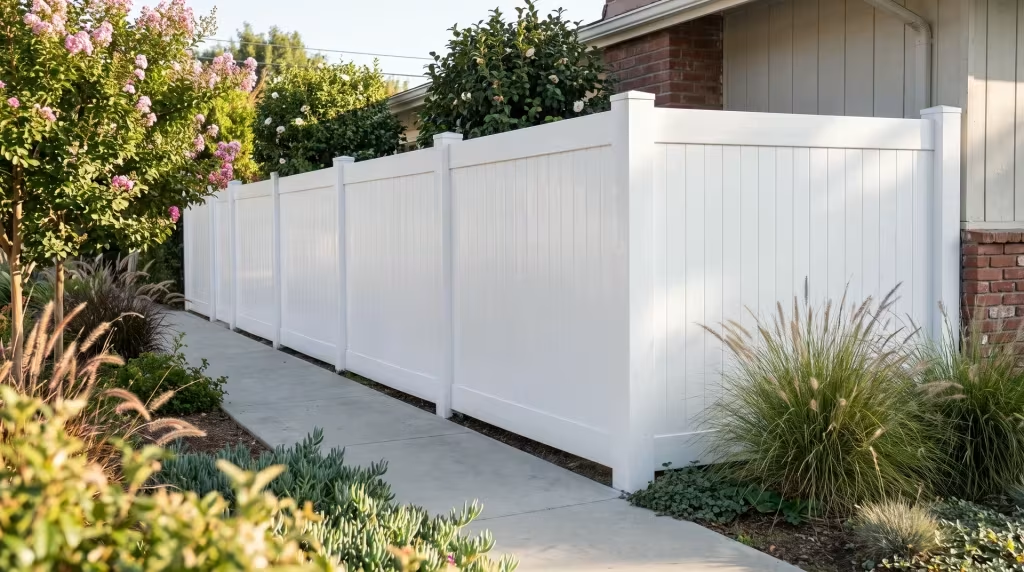
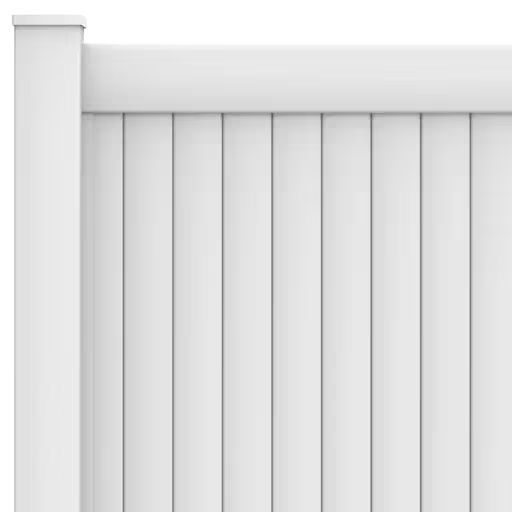
White
Call Now: (844) 744-0707
A matching vinyl gate is fabricated to your fence run, not pulled off a shelf. Same style family, same color, same height, same pickets and caps, so it settles into the line instead of landing close but a shade off.
We fabricate that match to your run and hang it across Greater Los Angeles, Ventura County, and the San Francisco Bay Area, on a metal frame that holds the line. The crew that installs it also builds it in-house and wholesales the material, so you get the whole gate, not a boxed kit.
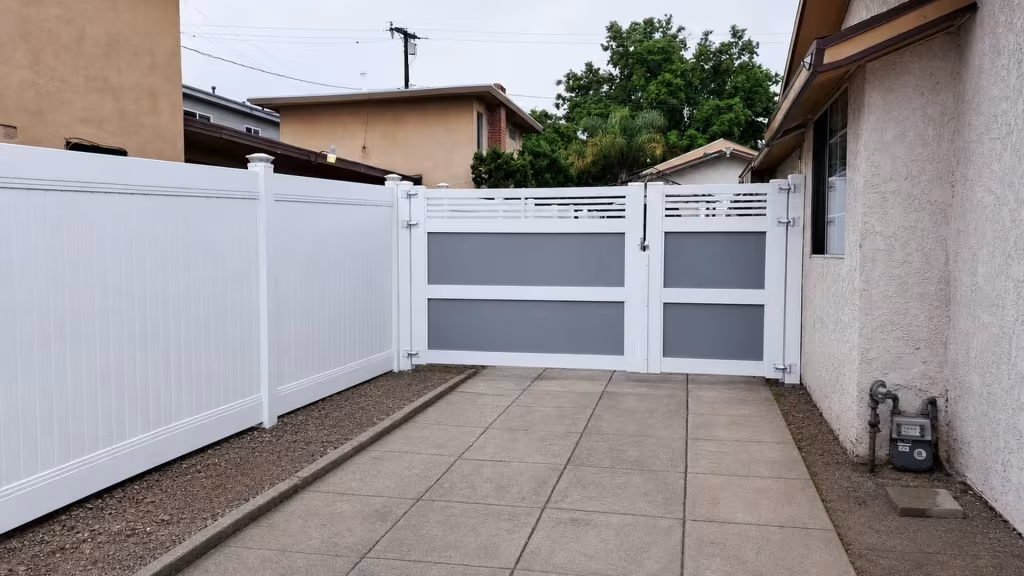
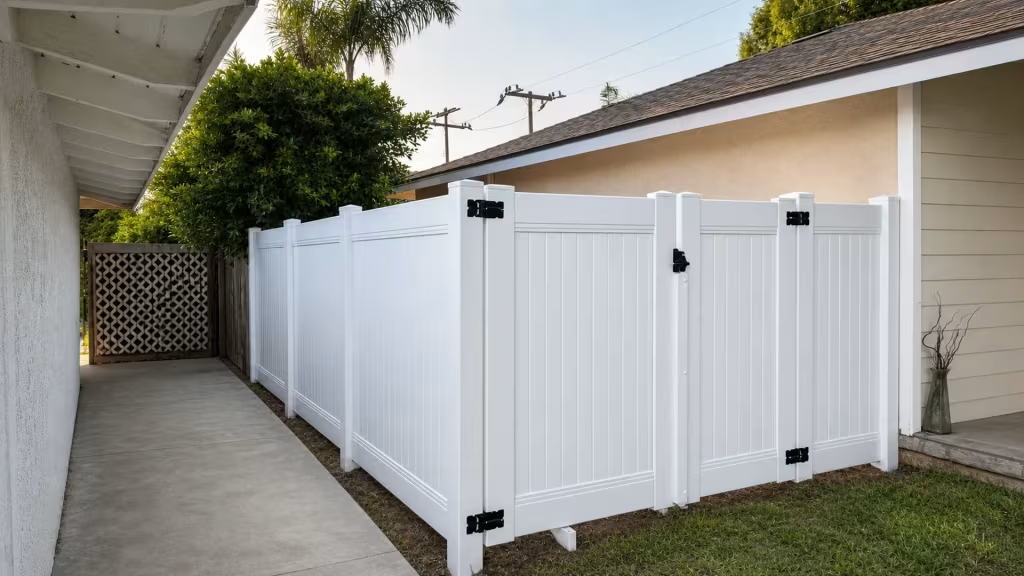
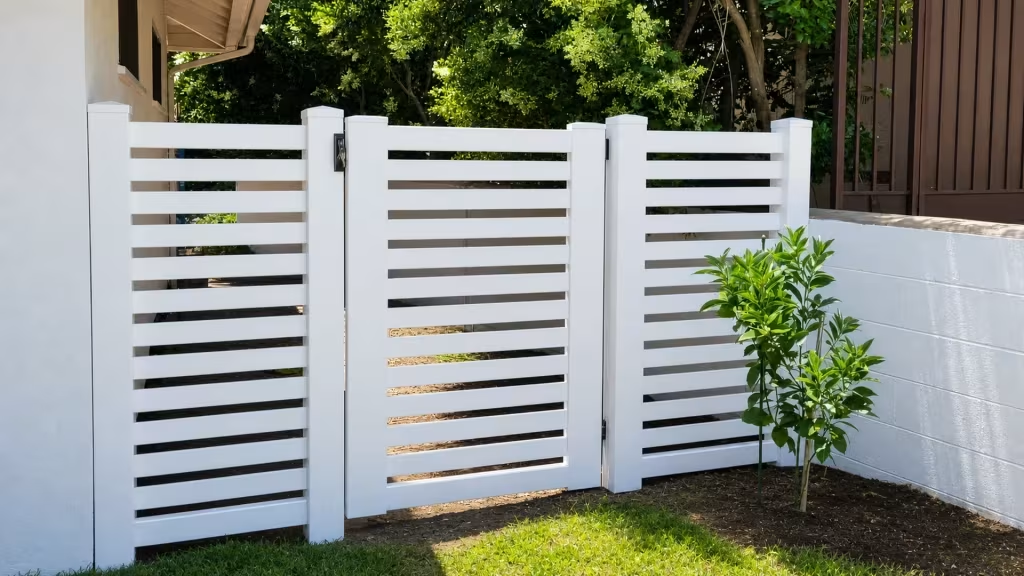
A matched gate is built to your run, never chosen off a rack, so it belongs to the line instead of sitting on it as an add-on.
Look up a matching gate and the results are usually kits, price grids, and DIY clips, each betting the nearest stock size roughly lines up with your fence. We work the other way: read your run, then build the gate to it.
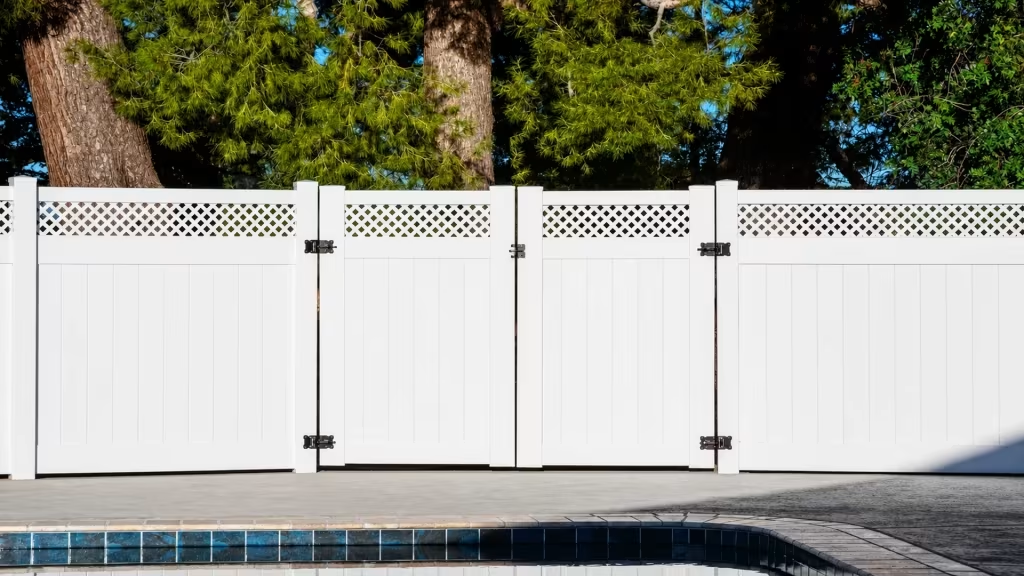
A real match lines up the whole gate, not only its color. The gate reads as one section of the run when six things agree:
Get all six right and the gate stops being something you notice. Get only the color right, the way a shelf kit does, and the eye still catches the seam where the two meet.


Both, and either way we measure the opening first. On a new build the gate is drawn into the run from the start, so it leaves the shop as one order and hangs as one continuous line.
On a run that is already standing, the crew reads what is up, then fabricates the gate to match the style, color, and height already there. Plenty of homeowners already own the fence and usually wonder whether an add-on can ever look right; measured and fabricated to the run, it does.
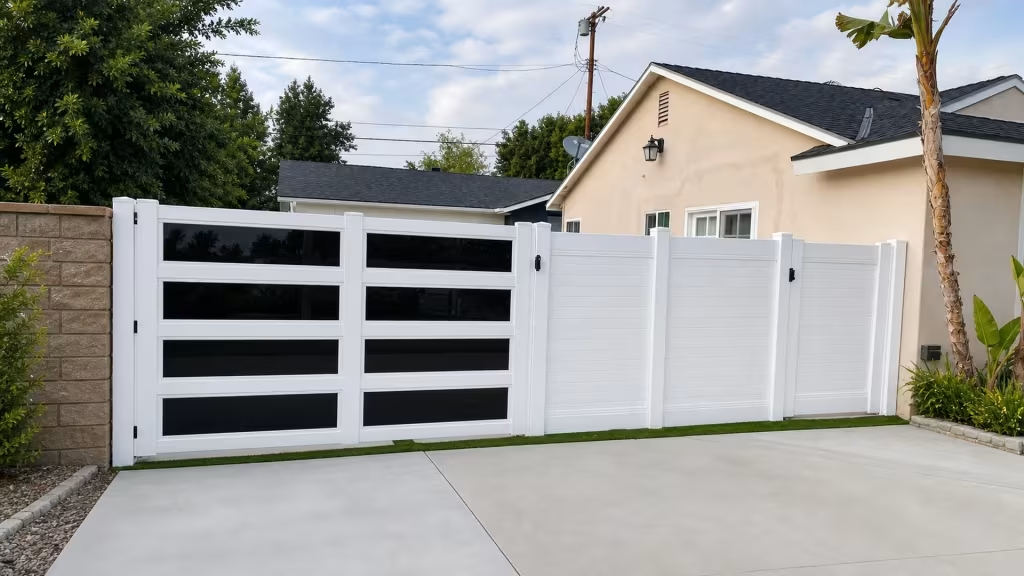
A matched gate holds its line only because the frame is built in. Vinyl on its own is a soft skin that creeps, so a bare matched panel slowly drifts out of true and stops reading as part of the run.
Inside ours, a galvanized-steel or aluminum frame carries the load and the hinges bolt to that metal, not to hollow plastic, so the gate keeps the same line as the fence for years. A wide vehicle opening asks more of the frame than a walk gate does, and a vinyl driveway or rolling gate is built for those spans.
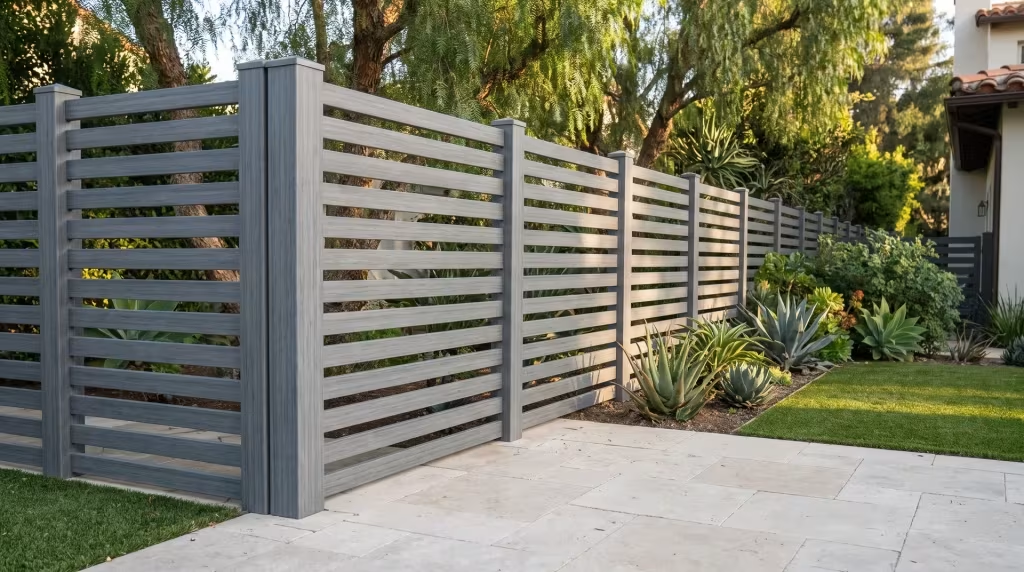
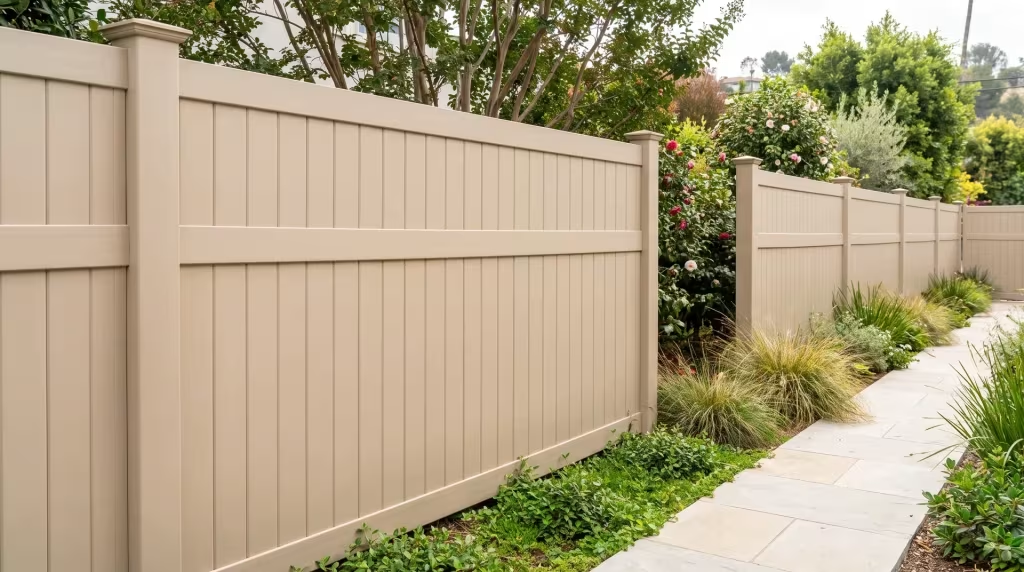
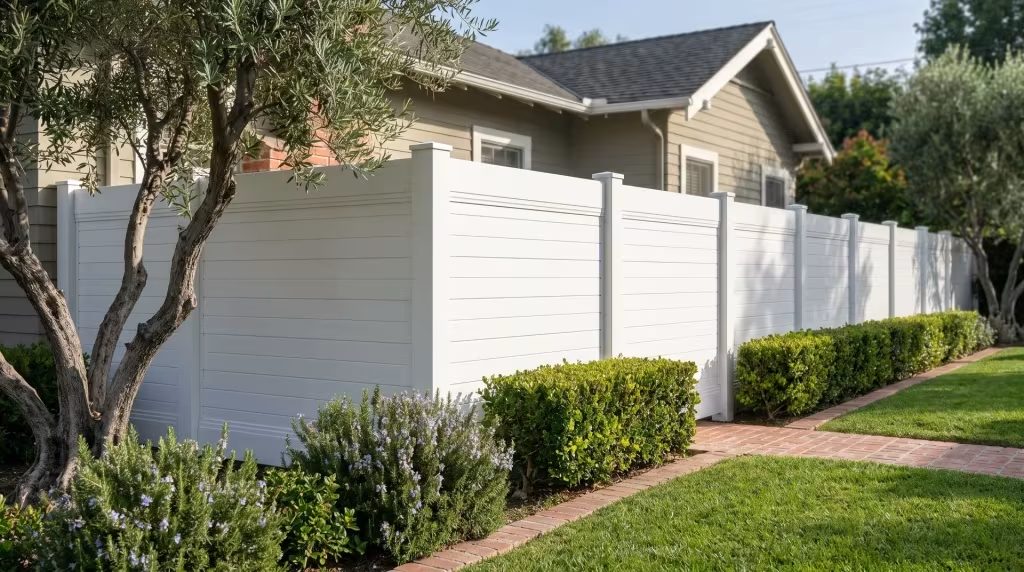
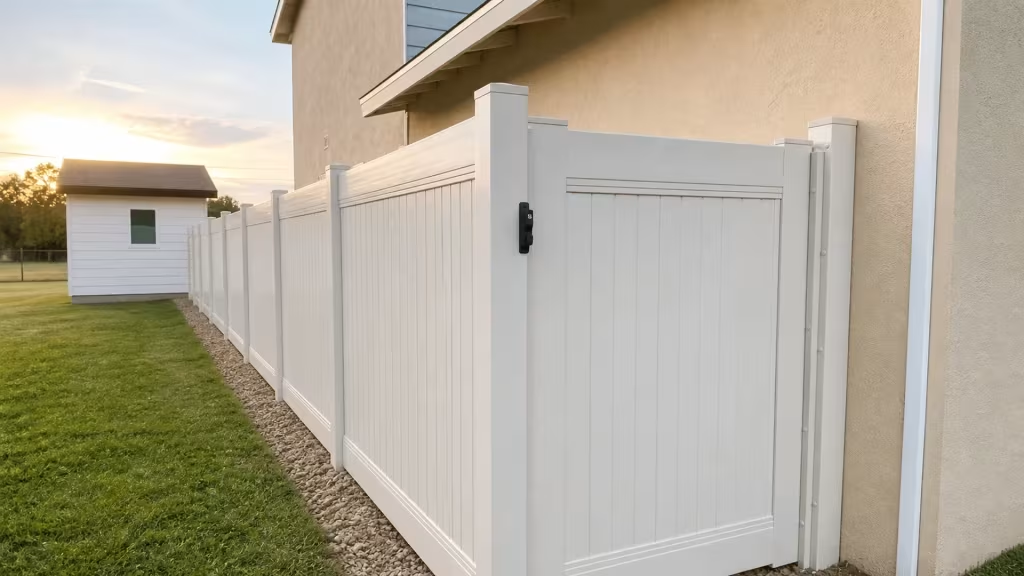
We match across the full palette and every style family we build, so the gate is never stuck to the closest shelf color. Vinyl runs to 14 colors in three families: Standard Solids in white, tan, clay, and gray, six Smooth Woodgrains, and four TimberGrain textures.
Every family carries a matching gate, from a solid privacy run to spaced pickets to a semi-private or lattice-topped line, at any height from 2 to 8 feet. Whatever the run is, the gate is built to it.
A kit is picked from a short palette and cut to the kit, not to your run, so it lands close rather than matched. Its color range is narrow, its caps, rails, and picket spacing follow the box’s own pattern, and its height is whatever ships. A wood gate bolted onto a vinyl fence only shows the seam more, and the honest move is to match the run in vinyl.
| What you compare | A store kit | A gate we match |
|---|---|---|
| Color range | A few stock shades | The full 14, three families |
| Caps, rails, pickets | Cut to the kit | Cut to your run |
| Line over time | Drifts as it sags | Held by the metal frame |
Yes, because a matched gate has to work, not only look the part. It hangs on self-closing, adjustable hinges with a lockable latch, in a finish that suits the run. Some jobs are really another gate: a wide vehicle opening calls for a driveway or rolling gate, a swap of a tired old leaf for a vinyl gate door, and the everyday side-of-house passage for a side gate.
We build every gate automation-ready and leave the motor to your automation contractor. Most matched gates sit well under the height that would trigger a building permit – in the City of LA that line is 10 feet for a non-masonry fence, and 6 feet in unincorporated LA County. Rules vary by city, so verify with your local building department.
Show us the run you already own and the gate gets cut to sit inside it: one family, one shade, down to the grain if your panels carry one. Built by somebody else? We match as near as that profile allows. Pairing a body tone against a contrasting frame is a deliberate choice too.
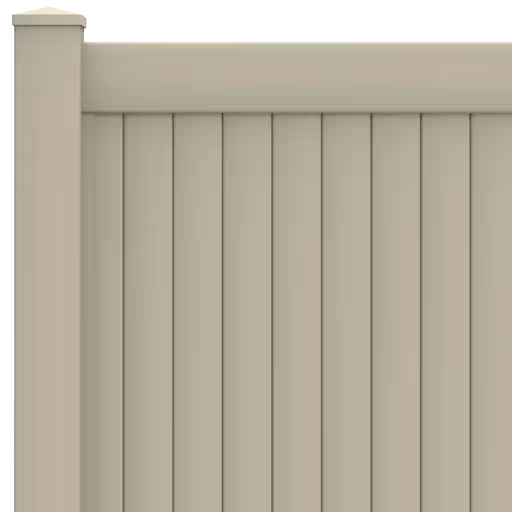
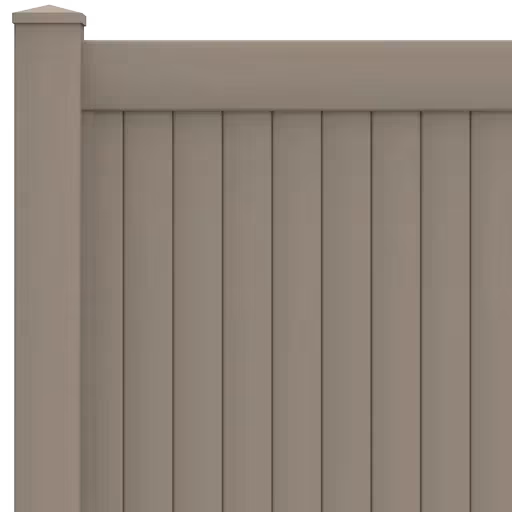
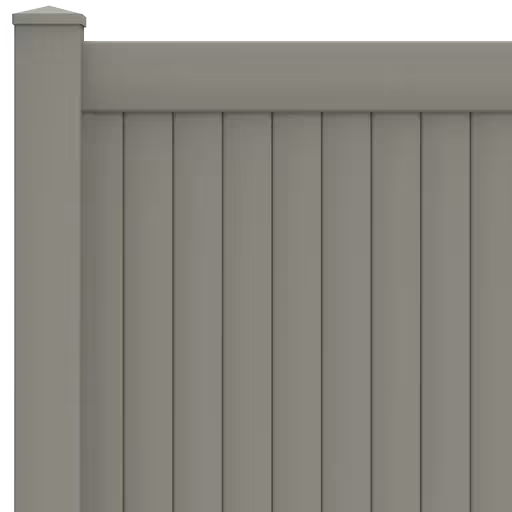
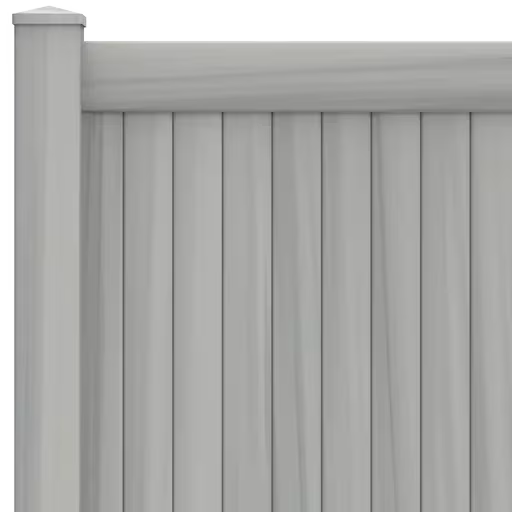
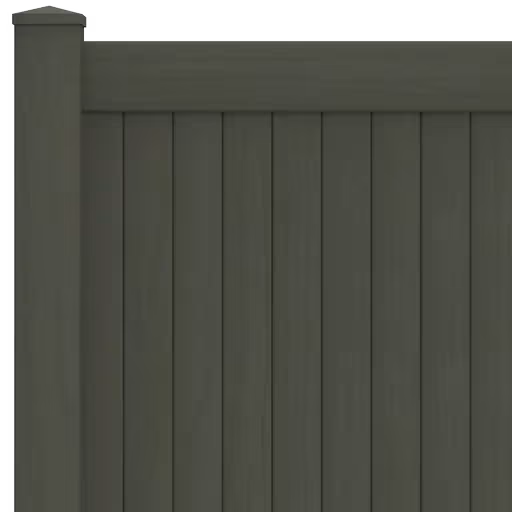
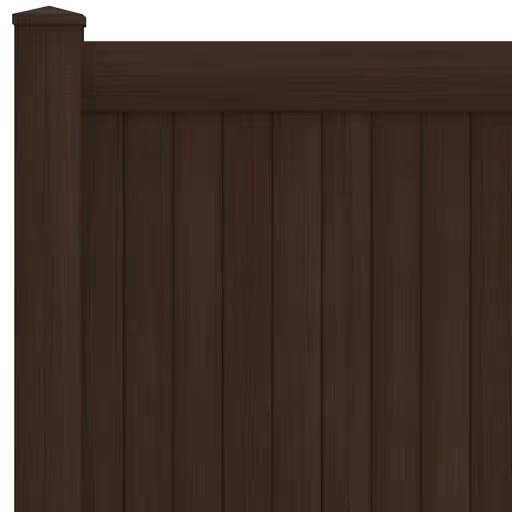
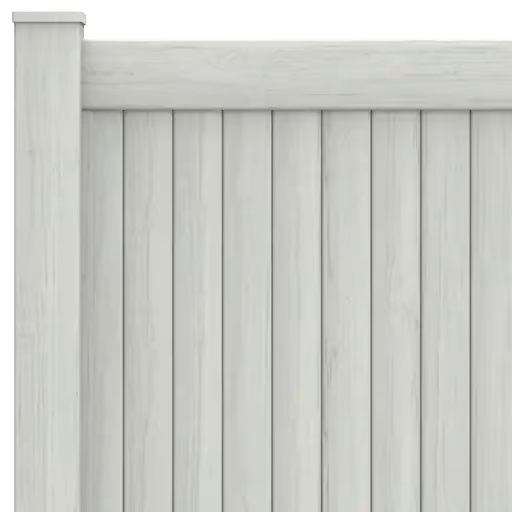
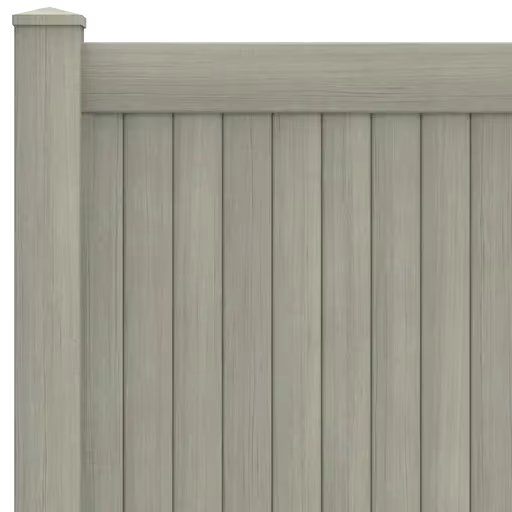
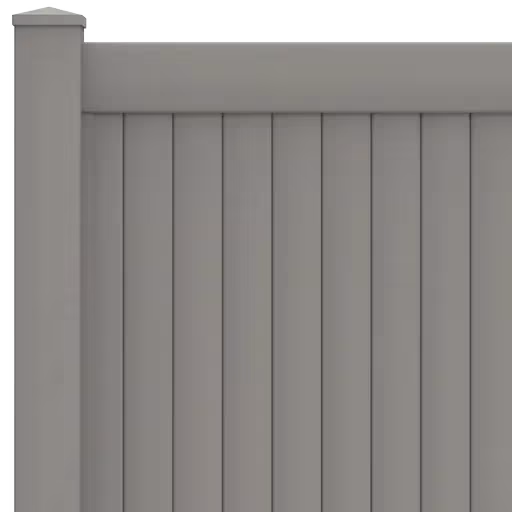
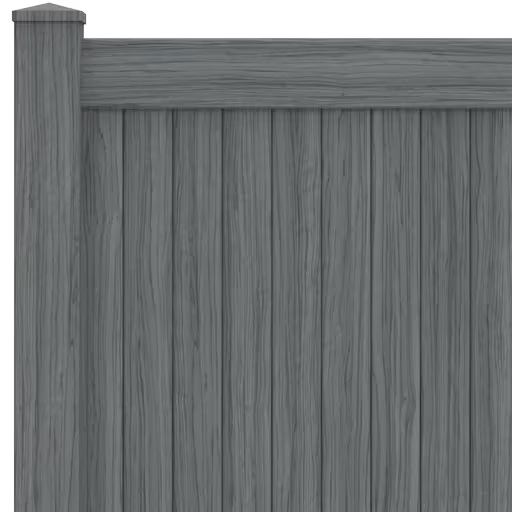
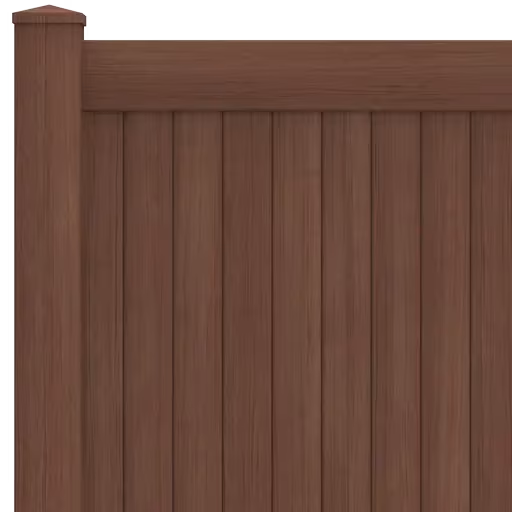
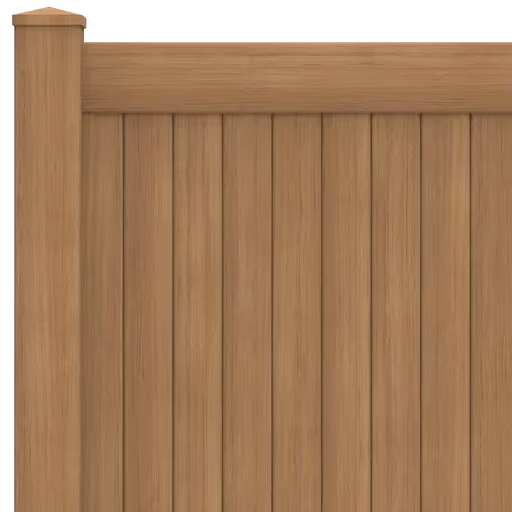
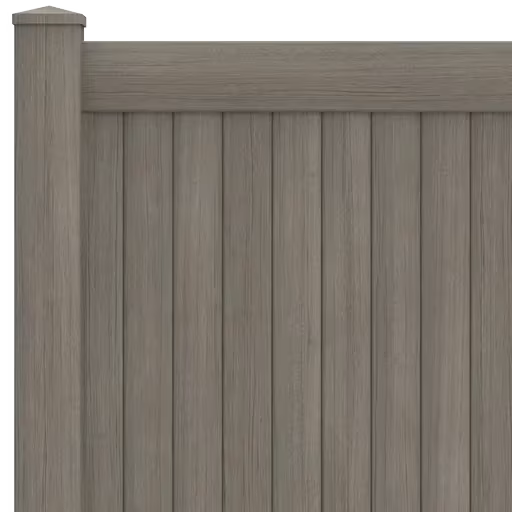
Matching is a habit we keep in the shop, and we bring it to whole runs, to a topper sized for a block wall you already own, to a corner nobody stocks a part for. We cut to the site, not to a catalogue.
Driveway gates ride on a welded steel frame under the vinyl skin, sized to your opening so it never sags.
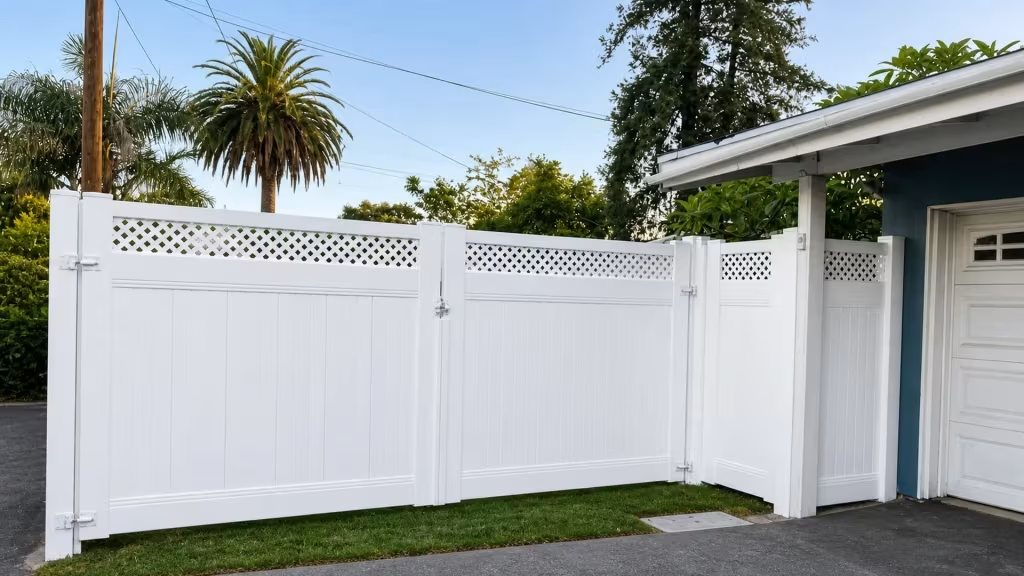
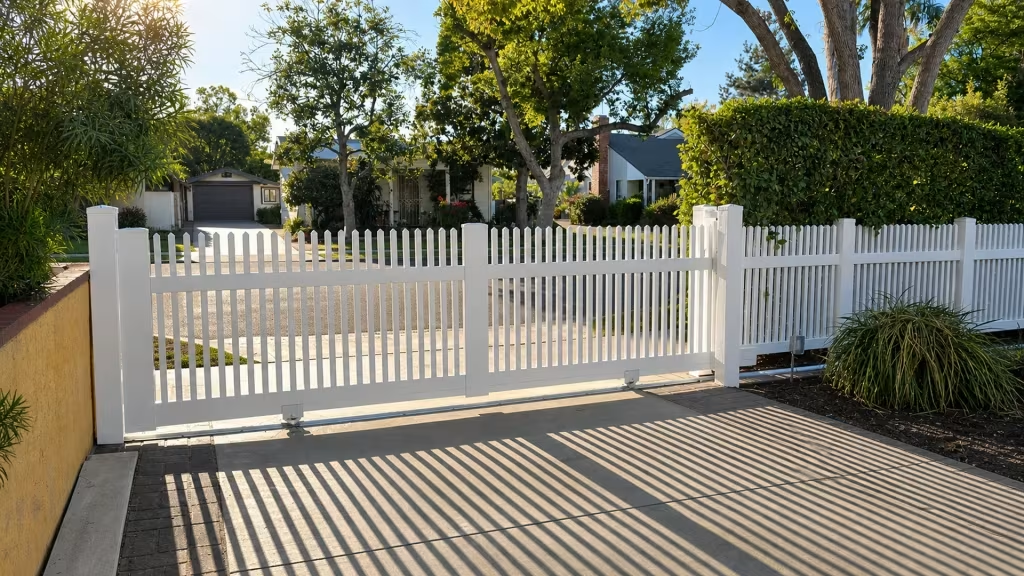
Rolling gates slide sideways on a wheeled track, clearing a wide opening with no leaf left to sag.
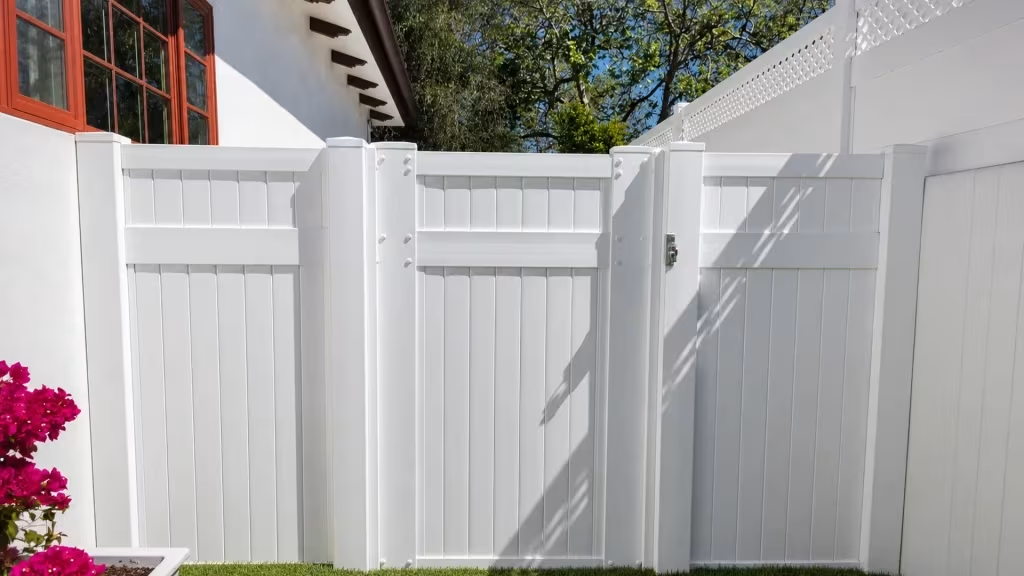
The pedestrian side gate is measured to your actual passage and hung self-closing and self-latching.
Highly recommended company for your Vinyl fencing needs. This is the second time I have hired the company, and they handled it like pros from start to finish. Big thanks to David for laying out the perfect plan and following up on the execution.

Nairi recommendations and follow through were excellent. Gagik, the installer, assembled the fence with craftsmanship. Fantastic end result. The fence looks beautiful and a great enhancement to our backyard. We highly recommend Pro Vinyl Fencing.

Pro Vinyl Fencing is an incredible family owned business that uses excellent materials and are master craftsmen in vinyl creations. We are extremely pleased with their quality work and installation skills. We will call them again for our next vinyl project. The Stoker’s

I am so glad I hired Giorgi at Pro Vinyl Fencing for the installation of my vinyl fencing, gates, and patio cover. They showed up on time, worked professionally, paid attention to all details and cleaned up after they were done.
Giorgi was very punctual at returning calls and very easy to work with. I highly recommend him and his staff.

Each gate in this set was made to disappear into the fence beside it. Browse real matched vinyl gates our crews fabricated and set across Greater Los Angeles and, now, the Bay Area, and see how each shares the style, color, height, and caps of the run it joins. That match is the job.
Greater Los Angeles and Ventura County are home turf, and since 2018 matching a gate into a run has been everyday work here. Across the basin and the valleys, we measure the fence on site and build the gate to it, so it stands as one line. Best-rated locally, and 500-plus five-star reviews say so.
The Bay Area is the newest market we serve, and here we lay the same track we laid in Los Angeles, gate by gate. Expect the same shop-built, metal-framed vinyl gate, fabricated to your run and hung to hold its line. No long local record here yet, so we build it one honest install at a time.
A matched gate follows one path from first visit to final swing: we see the run, agree the match, fabricate the gate on its frame, and hang it in line. It starts free and on-site, because the fence in front of us is what the gate must answer to.
One crew measures, matches, builds, and hangs it. No kit handed off, no guesswork on the color.
At no cost, a salesperson comes to the run, takes the opening, and reads its style, color, height, pickets, and caps.
We lock the matching spec into a clear written contract, so the color, style, and height hold no surprises.
The matched gate is fabricated on a metal frame, so it carries its weight and keeps the fence’s line.
We hang it self-closing and in line. Vinyl holds a transferable limited lifetime warranty, our own work five years.
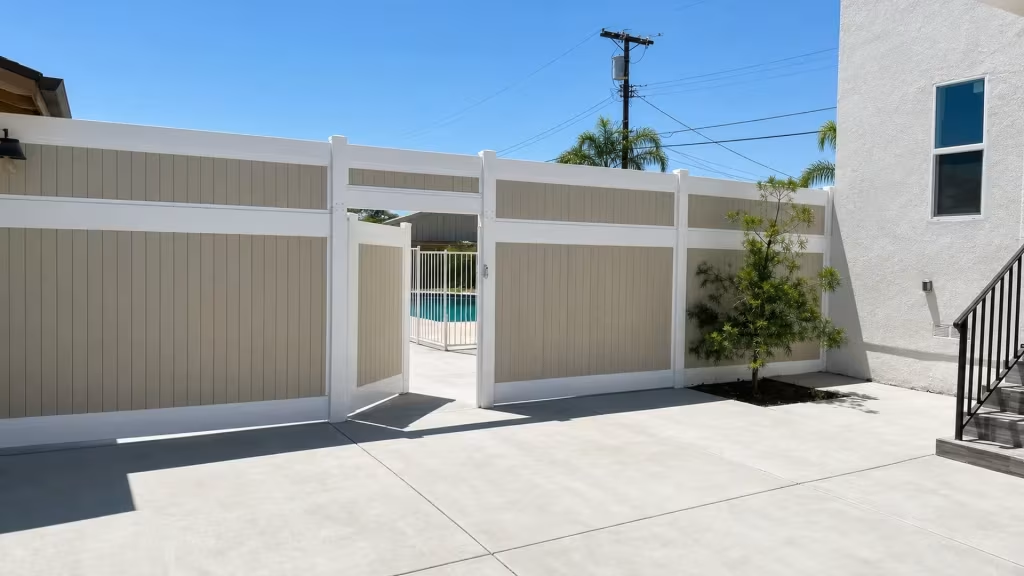
How to match a gate to a fence run, new build or existing, and keep the line clean for years to come.
A lattice top lets light and air through a Los Angeles fence line while still blocking a direct view into the yard.
Fences blog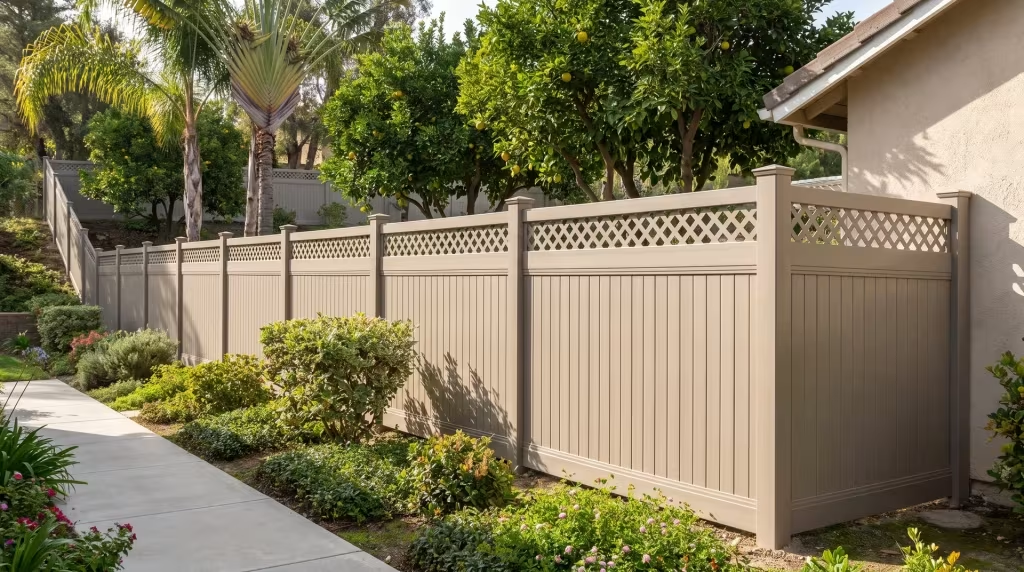
Matching Your Gate to the Fence: Your Questions
These are the questions homeowners bring us most about matching a gate to a run, from whether it truly blends to what usually shapes the price. Plain answers sit below. For your exact opening, a short on-site visit gives the real one, and we are glad to come measure it.
Not sure it'll match?
Talk to a matched-gate expert and book a free on-site estimate.
Yes, if the whole gate matches, not just the color. Blending in takes the style family, the height, the picket spacing, the rail layout, and the post caps agreeing with the run, not one shade close, the rest guessed.
Match all of it and the gate reads as a section of the fence rather than an add-on.
Either. With a new fence, the gate is drawn in from day one, so it ships as a single order and reads as one line.
On a fence already standing, we measure the opening and build the gate to match what is up. Both start from a measured opening, not the nearest stock size off a shelf.
Because it is built to the box, not to your fence. A kit ships in a handful of stock shades, with caps, rails, and pickets set to its own pattern and a height off the shelf, so it never quite lines up.
Built to your run in the full color range, a matched gate leaves no seam to give it away.
Yes, as near as the profile allows, and we say how close that comes. Profiles differ between makers, so an exact match is easiest when the run is ours, though a careful build blends.
It is also the honest answer for a wood gate on a vinyl fence: match it in vinyl, in the shade the fence wears.
Usually match, so the gate reads as one line with the fence. A deliberate accent, say a picket gate in a solid run or a contrast color, is a real choice, but it should be one you make on purpose, not a mismatch you inherit from a kit.
Most runs look best when the gate simply disappears into them.
The build, not a sticker. What moves it: how much run to match, the style family, the height, whether it joins a new fence or an existing one, and the hardware.
The site plays in too. That is the reason a true figure only comes from a free on-site visit, where we see the fence and price it honestly.