White
Call Now: (844) 744-0707
An arched picket run sets upright pickets an even gap apart, their tops climbing to a gentle crown at the center of each section. That rise lifts a plain picket line into a formal accent, the view still open between the boards.
Every arched run is shaped in our own shop, each picket cut to the length that builds the curve, then installed on site to the exact line of your yard. A licensed crew stands behind it, rated 5.0 across 500+ five-star reviews, serving Greater Los Angeles and the Bay Area.
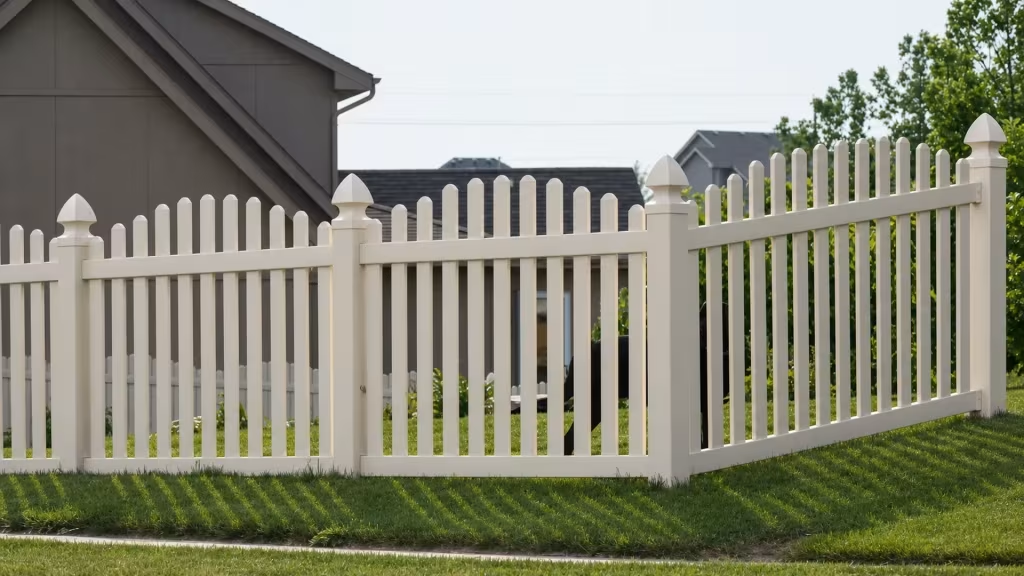
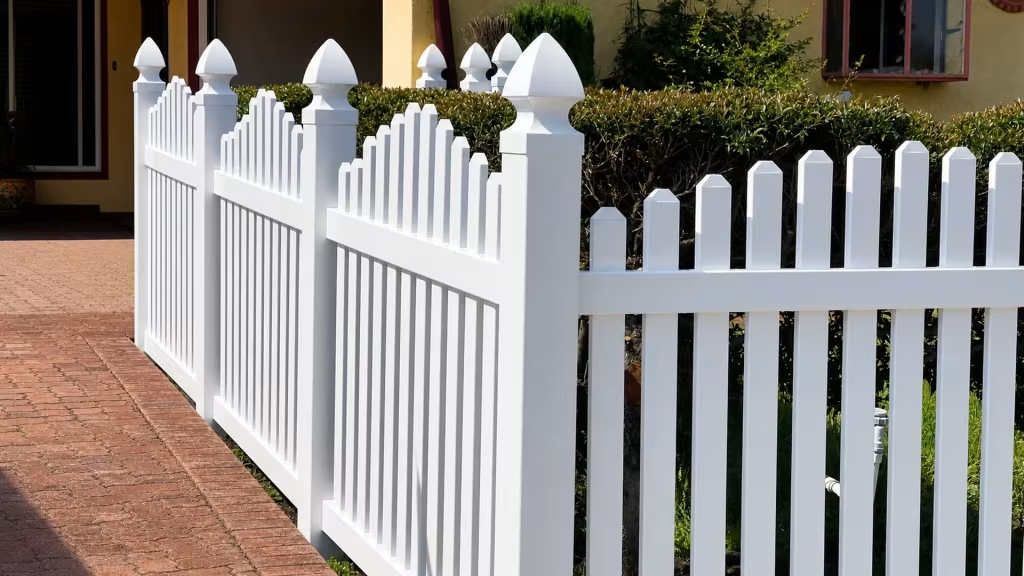
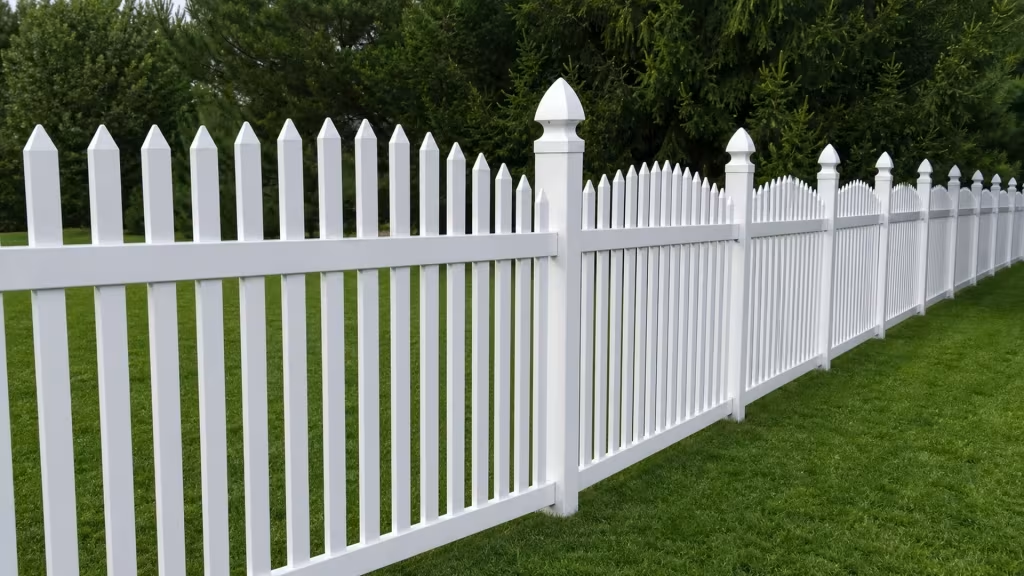
An arched picket is the convex crown on a spaced upright run, and we shape it in-house and set it to your yard’s size.
The arched top, explained: how the curve is fabricated, how it differs from the scalloped and straight looks, where it honestly fits, and how tall your front-yard run can go, usually set by your city’s cap. A free estimate closes it.
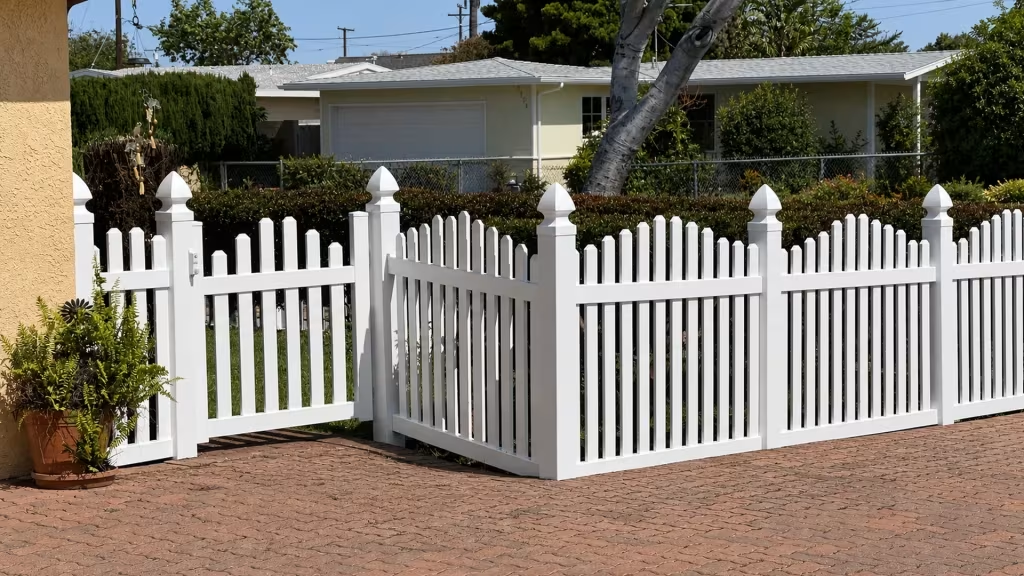
An arched picket top is a run where the top line curves upward, rising to a peak at the center of each section. The pickets stay separate and capped; it is the line across their tops, taken as a whole, that forms the crown.
The curve is cut, not bent: each picket is made to a graduated length, short at the ends and taller in the middle, so the capped tops step into an arc. On our Sheffield panel that is ten 7/8 by 3 inch pickets under dog-ear caps across a 69 inch section. Board spacing and the rest of the picket basics work the same here as on any vinyl picket fence.


An arched top is the formal move that makes a picket line stand out on a street of flat-top fences. The same white boards read as an ordinary boundary when the top is level, and as a designed feature once it rises to a crown, which is why arched runs land at entries, front walks, and garden beds. Because each panel is shaped on its own, our crew can bend the whole run to a gently curving property line.
Arched describes the top line across a section. It climbs to a peak dead center, a convex curve. Scalloped is that same curve turned over, concave, sinking to a low point in the middle. Straight holds level end to end. The picket itself never changes: in all three it is the same plain rectangle, running up through the top rail and finishing above it under a dog-ear cap, so the only thing that shifts is the line those tops draw.
| Through-rail style | What the top line does |
|---|---|
| Straight | Level the whole way |
| Arched | Rises to a peak mid-section |
| Scalloped | Falls to a low mid-section |
Dog-ear is just the cap that comes standard on those exposed tops. Others fit the same picket, though: External, Gothic, Internal, Internal Flat and Spade will all seat on it, and any one can go on instead.
Closed-top vinyl is another family altogether. On those panels the picket ends at the rail and never rises past it. Nothing stands up there to cap. Which way the boards run is a separate choice between vertical pickets and horizontal pickets.
An arched picket is open by design: the pickets are spaced, so the crown is decorative and the open gaps still frame the view behind. Search results blur this: ‘arched top’ also pulls up tall privacy panels and arched gates, each a different fence for a different job.
This style is the decorative, open arched picket. Want that curved crown over a solid, no-gap screen? That is a different build, an arched-top privacy fence we also make, so tell us which one you picture and the quote stays clear.
Because the crown is the tallest part of the panel, a front-yard height cap is read at the peak, not the shorter ends of the arc. If a city holds a front fence to 42 inches, the top of the arch is what has to sit under that line, which quietly saves a permit surprise.
Our Sheffield arches stand 3.5 and 4 feet, but the exact cap is your city’s to set, so verify yours locally, and we build the arch to sit under it. And at 3.5 to 4 feet a spaced arched picket stands under California’s 60 inch pool-barrier minimum, so it cannot act as one.
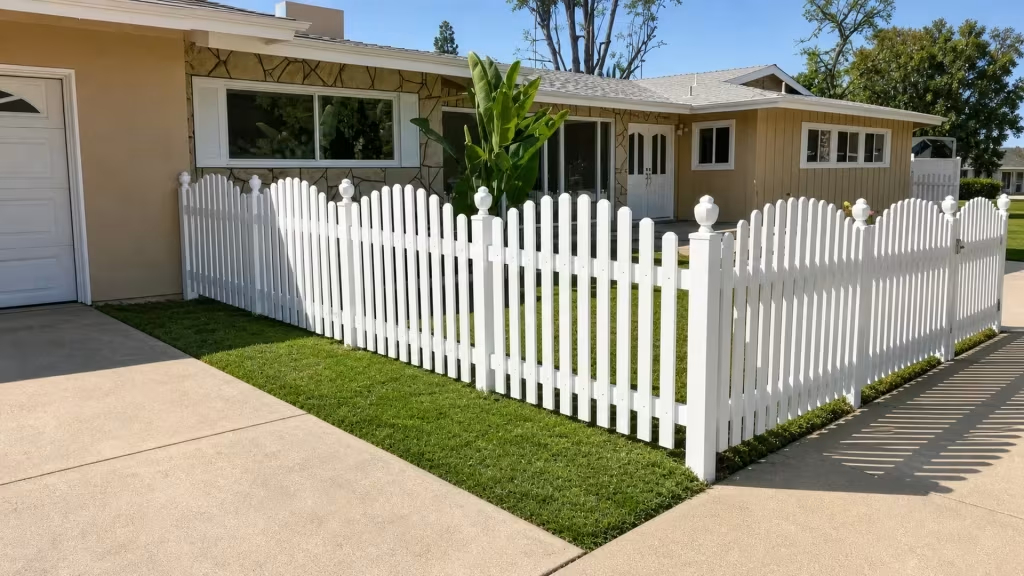
Every arched run is measured and shaped to your yard, so the odd heights, curved lines, and small jobs others wave off often land in our shop. The Sheffield line stands 3.5 and 4 feet as standard, and we build taller or custom heights to order. Where a panel needs it the bottom rail takes a steel insert: the Clay and Tan arches carry it, the lighter White panels do not.
The gate that hangs in an arched run is fabricated to match, on a vinyl-skinned metal frame, in single, double, or rolling form, and it stays hand-operated. The vinyl carries a transferable limited lifetime warranty, and our labor a separate 5-year workmanship warranty.
The arc is what your eye lands on, so choose for the top line first. A pale panel keeps the curve legible against planting or a wall behind it. A warmer tone lets the crown sit quieter in a garden. Hold a swatch up at eye level and sight along the bend.
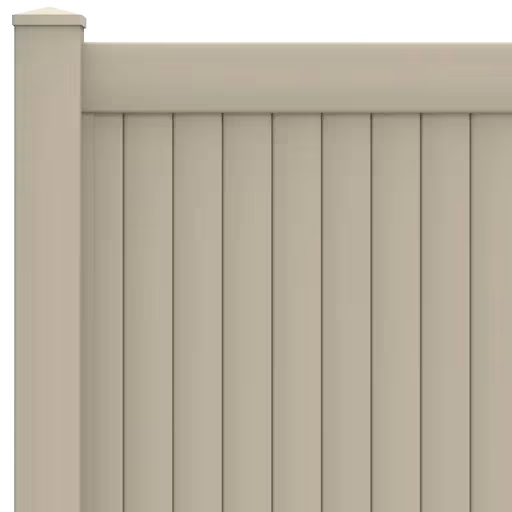
Shaping a top is shop work, and so is everything under it. We cut panels to the length of your run, set the posts, and hang whatever swings in the line. If a second stretch of the property wants another style, we build that too.
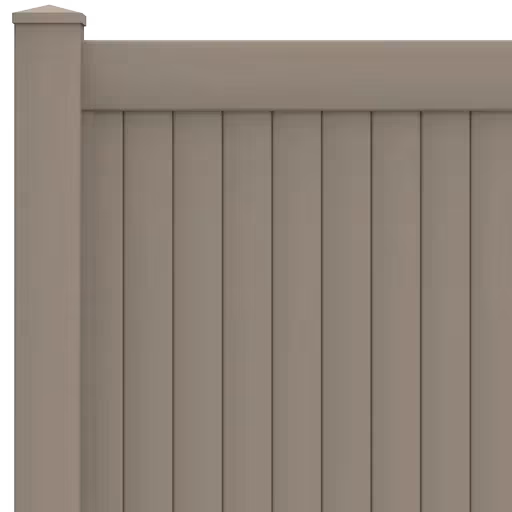
Closed-top pickets sit flush under a top rail for a finished, level line, with the gaps between boards left open.
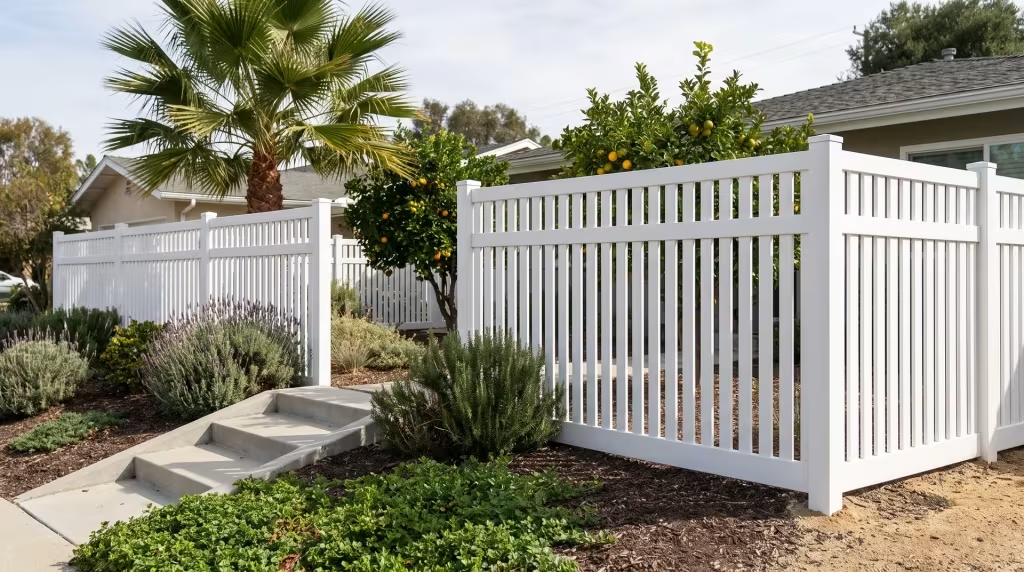
Dog-ear pickets run up through the top rail and stand exposed above it, each one wearing a molded cap.
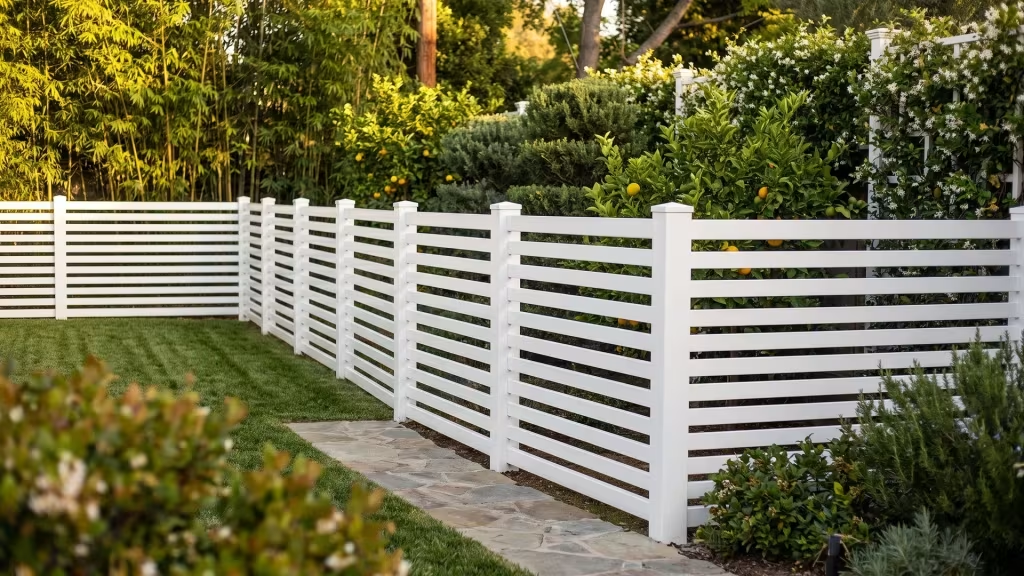
Horizontal pickets run flat boards side to side instead of standing upright, open enough for light and air to pass.
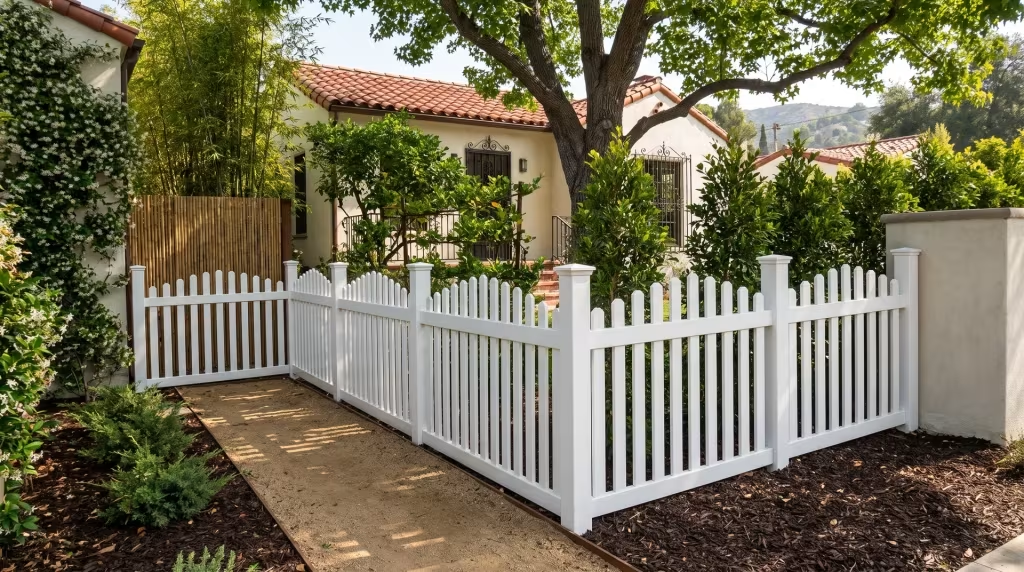
Scalloped picket tops dip into a soft scoop at the center of each section and rise back up at the posts.
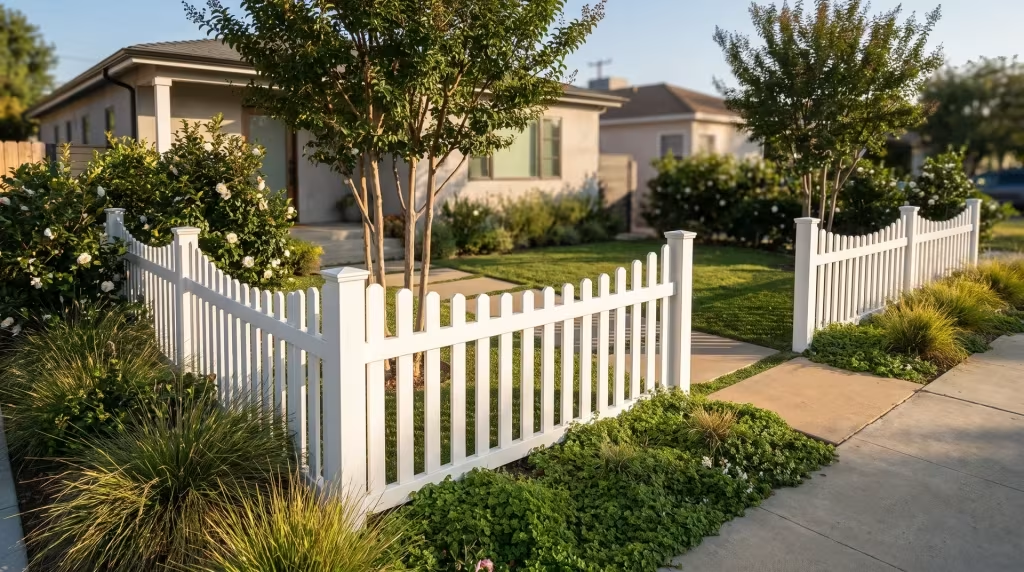
Straight picket tops hold level the whole way across the run, no dip at the center and no rise to a crown.
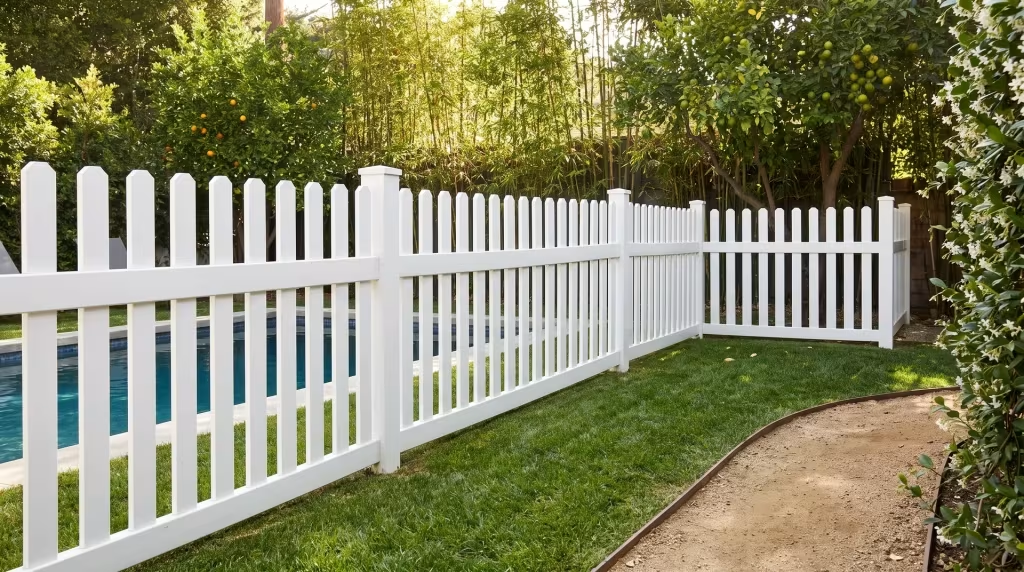
Pickets stand upright and stop clean at the top rail, the closed-top spacing behind the classic white-picket look.
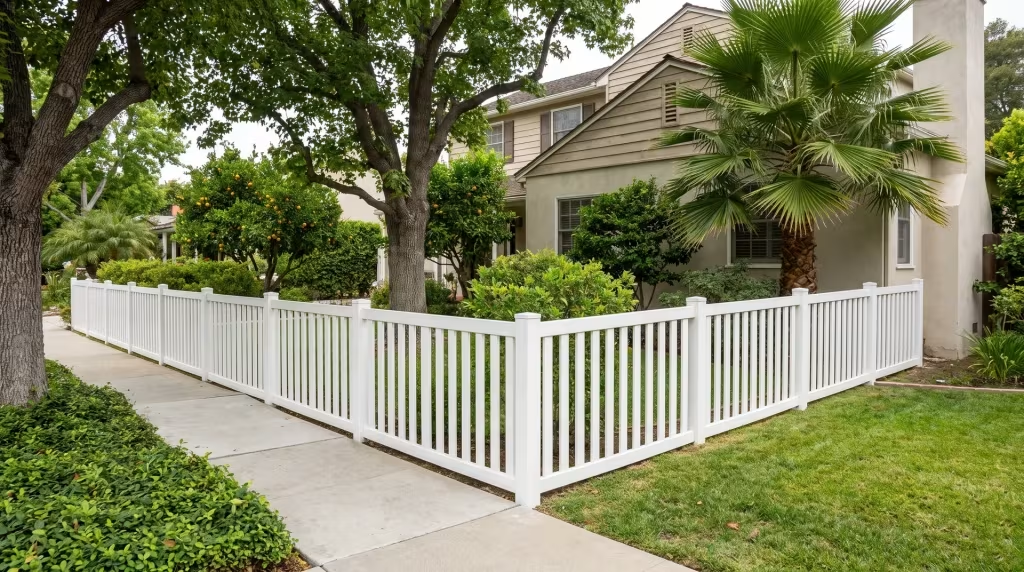
They were timely, professional, thorough, and communicative. David who did the installation of the two gates skillfully installed them. Explained how the locks worked.
I asked him to make adjust the closing mechanism and he did and also showed me how to make the adjustment if needed in the future.

I called company and Jasmin sent out David, who was professional and did accurate measurements. I had toppers and easement gate installed. Chose walnut and even as special order everything was timely and no mishaps. They are clean, accurate and reasonably priced. Highly recommend!! I’m coming back for toppers on another wall of yard

Pro Vinyl Fencing company is the best and most reasonable in Burbank. An easy company to work with. They provide good service and quality products. Customer service and responsiveness was great.
We are grateful for the quality of their work and look forward to use their service again. Highly recommended! You won’t regret doing business with them.

These guys were awesome. From Mike, the salesman, coming to give me a quote to the installation by Levon and Igor. Great job. Finished in one day and cleaned up after themselves. Highly recommend them. Don’t look anywhere else. Thanks Jasmine and team!

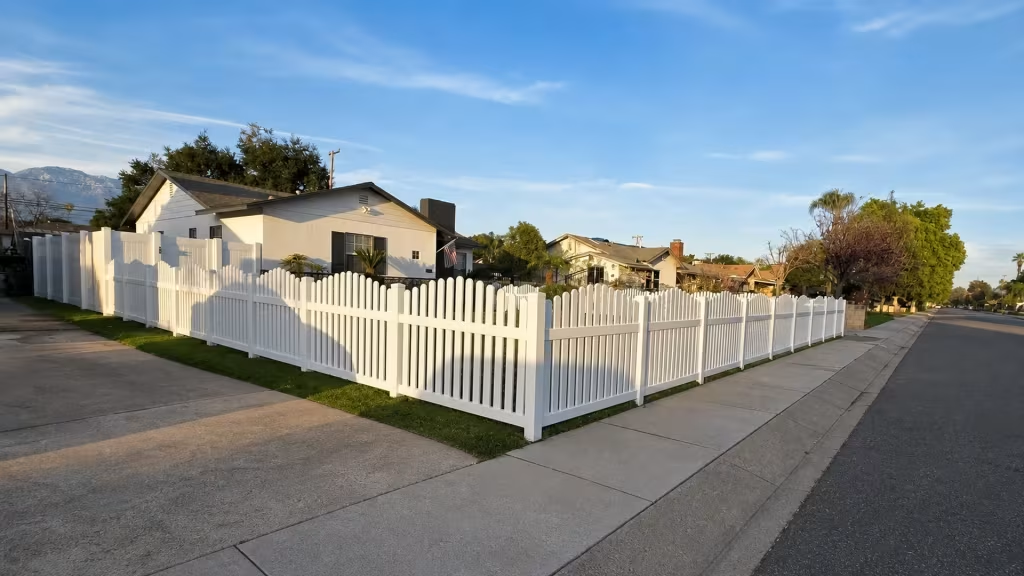
A crown shows better in a photo than on paper. These are arched runs our crews shaped and set for owners in both markets, so you can watch the top climb to its mid-section peak, see how White, Tan, and Clay sit under a curve, and weigh 3.5 against 4 feet on a real home before you choose.
For an arched picket, the front-yard height cap shapes the design first, and it is read at the crown, the tallest point. Los Angeles caps a front fence at 42 inches, Glendale at four feet, and county and Ventura fronts run three to four feet. Rules vary by city, so verify yours locally.
Bay Area arched panels are cut in our shop and raised by our crew. Caps run city by city: San Jose limits a front fence to three feet, Oakland to three and a half, San Francisco to three when solid, and Fremont to four. The crown sets the height, so verify your cap with your city.
An arched project runs a clean path, with one wrinkle: because each picket is cut to length, most of the shaping happens in the shop before anyone digs. You settle height, color, and price up front, on an estimate answered the same business day.
One crew usually carries your arch from the first measurement all the way through to the last gate latch.
A salesperson walks the yard, settles height and color, and prices the run on site; an arch adds a little shop time.
Every line is on paper first: the run, its height and color, any gates, and removing any old fence, all priced out.
Posts are set in concrete, the graduated pickets and matching gate raised to the crown, and the site left clean.
The vinyl holds a transferable limited lifetime warranty, our labor a 5-year workmanship warranty, with easy care notes.
Crew notes on choosing a top profile, staging curb appeal, and keeping a white run crisp in the sun.
Vinyl lattice fencing adds privacy and pattern to a Los Angeles yard without the rot or repainting wood lattice needs.
Fences blog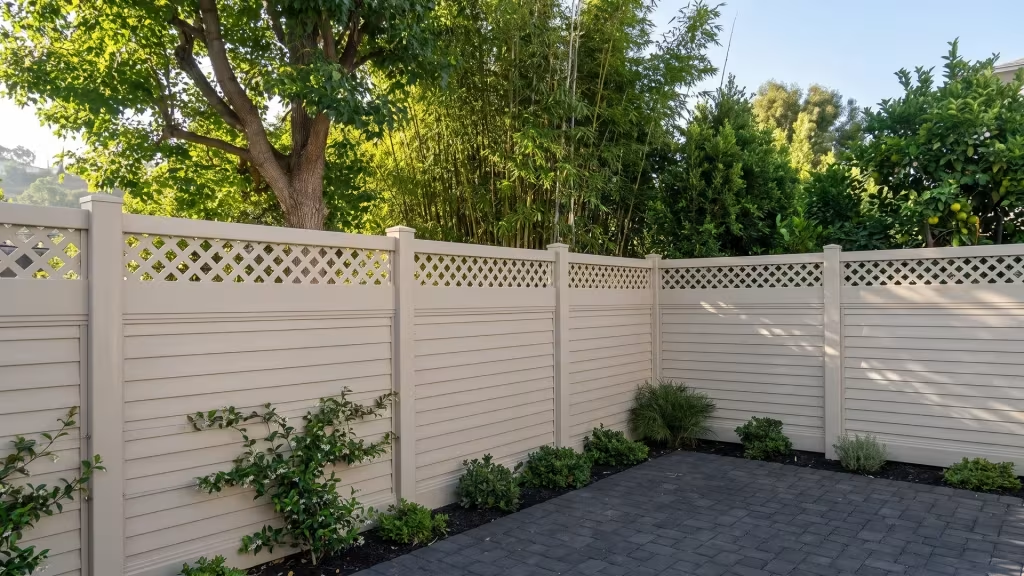
Your arched picket fence questions, answered
The questions that decide an arched picket come down to a few: what the crown is, how the curve is cut, which way it bends beside a scalloped run, whether it gives privacy, the colors, and how tall or curved it can go. Ask us anything not here, and the crew that builds it will answer, either market.
Still weighing the arch?
A free on-site visit gets your arched run priced, with no pressure.
It is a spaced picket fence whose top line curves upward to a crown at the center of each section, so the run reads as a formal, decorative accent while the gaps keep the view open.
Our Sheffield arched panels stand 3.5 and 4 feet in White, Tan, or Clay.
By cutting the pickets to graduated lengths. The boards near the posts are shorter and those toward the middle taller, so their capped tops step up into a smooth curve.
The rails underneath stay straight; only the picket heights change to draw the crown across each section.
Opposite ways. An arched top rises to a peak in the middle of the run, while a scalloped top dips to a low point in the same spot, so they are mirror images of one profile.
Arched reads more formal and upright; scalloped reads softer and cottage-like.
No. The pickets are spaced, so an arched picket stays open and the view carries through the gaps. If you want a curved crown on a solid screen, that is a separate arched-top privacy build.
At 3.5 to 4 feet it sits below California’s 60 inch pool-barrier standard, so it is not a pool barrier.
Yes. White, Tan, and Clay are the arched panel’s three solids; the woodgrain range is kept for the flat picket styles.
Color is baked to the core and holds for years, so a coating is never needed and would end the warranty.
Both. Sheffield arches are standard at 3.5 and 4 feet, with taller or custom sizes built to order.
Because each section is built alone, a run can trace a gently curved line when the crew sets the panels to the sweep. An arch takes extra shaping, so that lands as a factor in your free estimate.