White
Call Now: (844) 744-0707
A scalloped picket run spaces its upright boards evenly, then eases the capped top line into a soft scoop, lowest across the middle and full height at the posts. The dip is decorative, the gaps still open behind it.
You bring us the scallop you picture, and we cut it to your yard: each section sized on site, its pickets shaped in the shop, the run set straight. Our licensed crew serves Greater Los Angeles and the Bay Area, with a 5.0 rating built on 500+ five-star reviews.
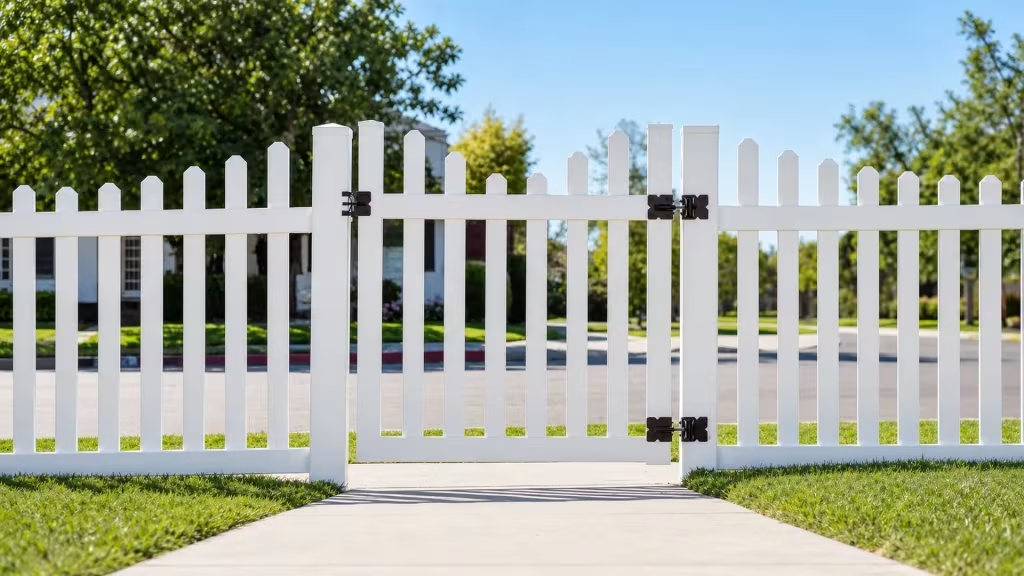
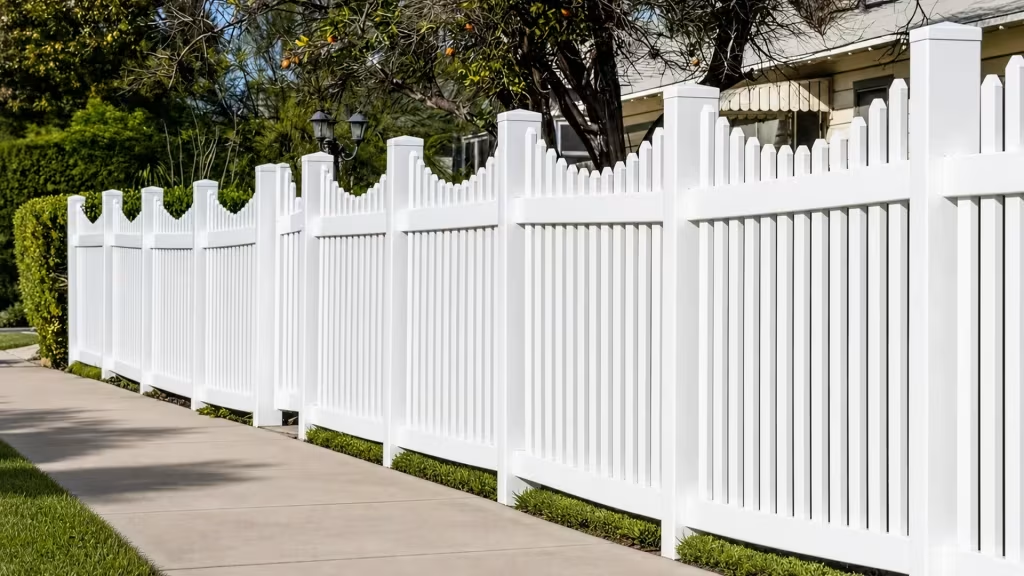
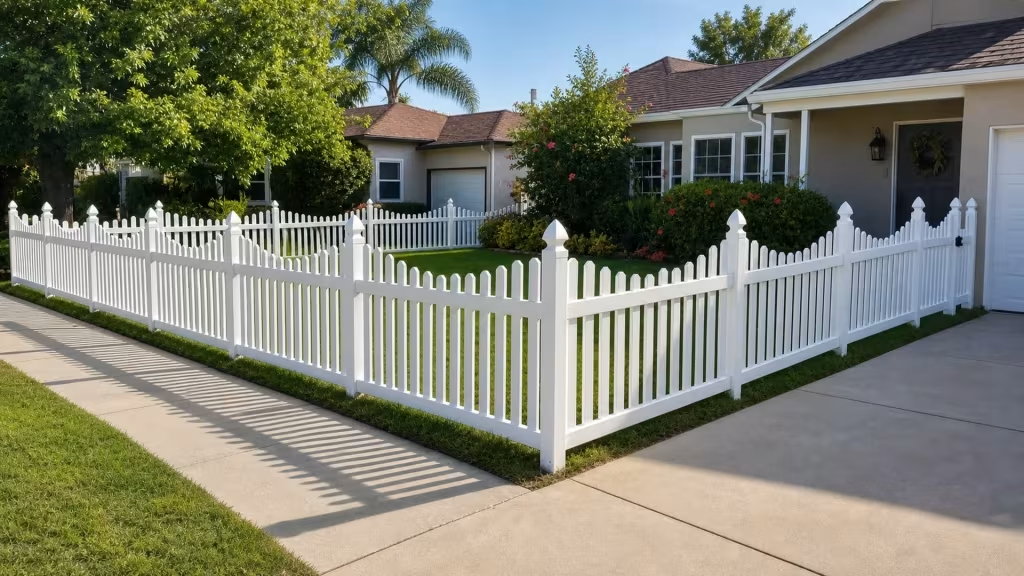
A scalloped picket carries a concave dip along a run of evenly spaced uprights, cut in the shop and set to the exact size of your yard.
Below: how the scoop is cut, how it sits beside the arched mirror and the level-top pickets, whether it is the scalloped privacy fence people picture, and how the center dip changes the measured height. A free estimate wraps it up.
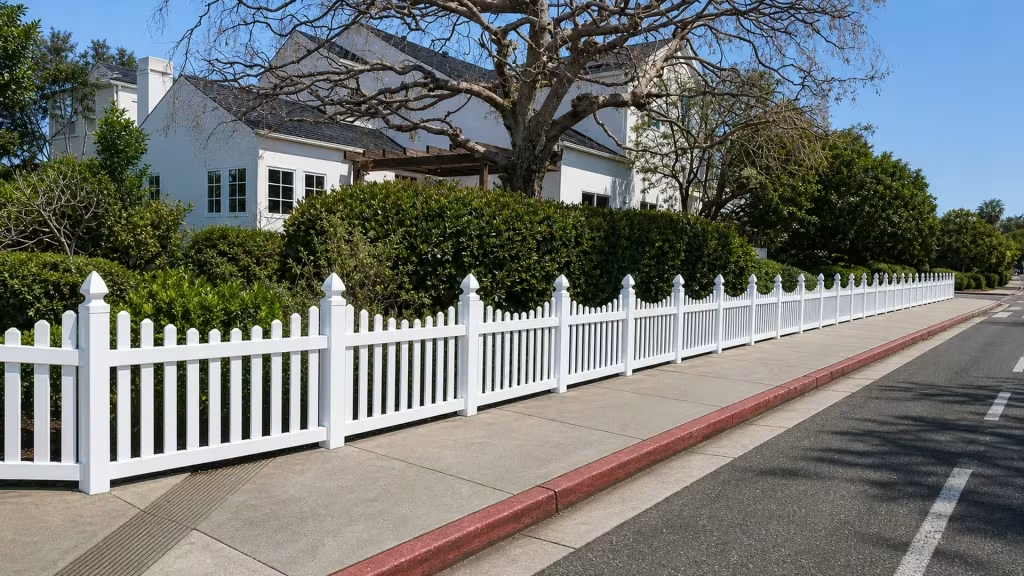
A scalloped picket top curves downward, dropping to its lowest across the middle and rising to full height at the posts. Each picket stands under its own cap; the scoop comes from their stepped heights.
The boards run tall at the posts and are cut shorter toward the center, so the capped line eases into a soft dip. The Langford panel runs ten 7/8 by 3 inch boards under 0.875 by 3 inch dog-ear caps, over each 69 inch section. Picket basics and board spacing are common to every vinyl picket fence.


A scalloped top is the soft, decorative pick: the scoop tends to read storybook and cottage-garden, a gentle curve where a flat or formal top stands stiff. It flatters a flower border, a front walk, or a garden gate, where charm beats a hard edge. It is the clean contrast to its mirror: an arched top climbs to a formal crown and reads grand, while a scalloped top curves down and eases, so the same white pickets usually feel relaxed.
Scalloped is a run-line curve: the whole top line scoops down to a low middle, then climbs back to the posts. Arched is its exact mirror, flipped to rise to a high center. Dog-ear names a cap, not a cut. Our scalloped panels carry that same cap, fitted to exposed picket tops, and the line stays level when every picket runs the same length.
Other cap styles fit that picket too, so we can set a different one. Closed-top needs no caps, since a top rail crosses the picket tops and closes them off. Which way the boards face is a separate question, answered by the vertical and horizontal picket styles.
| Top look | How it’s formed | Line across the run |
|---|---|---|
| Scalloped | Pickets graduated in height | Scoops to a low middle |
| Arched | Pickets graduated in height | Rises to a high middle |
| Dog-ear | Caps fitted to equal-length pickets | Stays level |
| Closed-top | Tops closed off by a rail | Stays level |
A scalloped picket is spaced and open. The scoop only shapes the top line, so the gaps carry the view, and the low center opens it a touch more. Worth clearing up: a search for ‘scalloped’ also pulls tall, solid screens wearing a scalloped crown, the scalloped-privacy panels, plus scallop gates.
Those are a separate build. Want a private screen with a scalloped top? That is a privacy fence we make as its own project, not this open picket. And a ‘reverse scallop’ curves up at the center, the arched look.
On a scalloped run the posts are the high points and the center the low one, so a front-yard height cap is measured at the posts, not down in the dip. Where a 42-inch front-yard cap applies, the post height is what must clear it.
The Langford scallops stand 3.5 and 4 feet; the governing cap is your city’s, so we mark it on the contract up front, and your city sets the final figure. At that height a spaced scalloped picket already runs below California’s 60 inch pool-barrier line, well short of a legal pool fence.
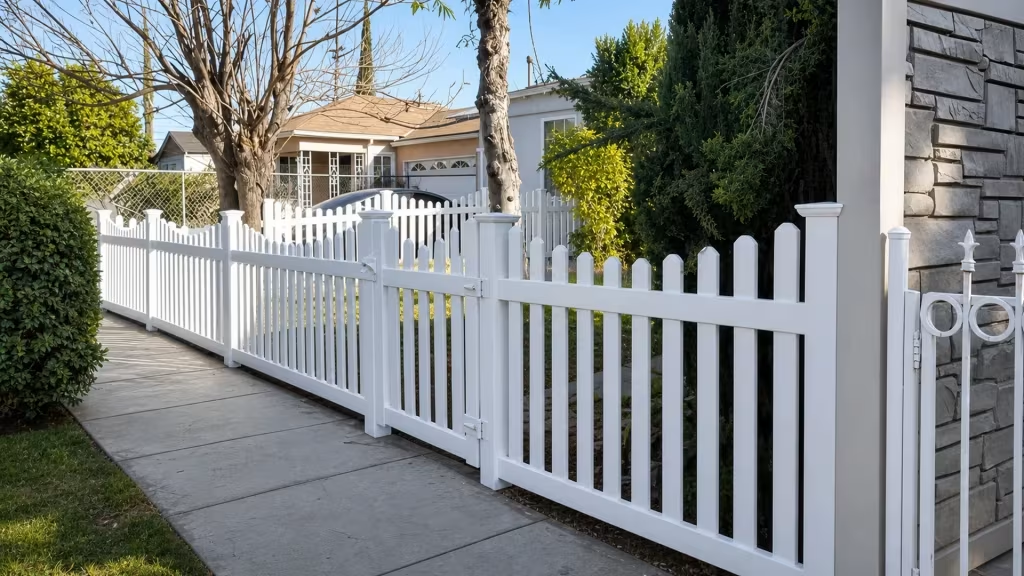
Because every scalloped run is cut for one yard, the awkward heights, tricky lines, and small jobs others pass up land on the bench. Langford stands 3.5 and 4 feet off the shelf, with taller and custom heights built to order. Where a scallop panel needs extra backbone, a metal insert rides inside the bottom rail: the Clay and Tan builds carry it, the White panels go without.
The gate matches, shaped to the same scoop and color, framed in metal under vinyl, taken as a single, double, or rolling unit, always hand-worked, never powered. Price follows the run’s size, its height, the color, and any gates, so the scallop is one factor in a free, on-site quote. The vinyl itself gets a transferable limited lifetime warranty; separately, a 5-year workmanship warranty covers the labor.
The dip drops low mid-bay and lifts at each post, so the backdrop shows most where the panel falls away. Test a tone against that backdrop, a hedge, a lawn, a stucco wall, rather than against the front of the house. Two swatches on the ground settle it fast.
The same low, decorative line can be made in metal. Our aluminum runs from short garden heights up to 12 ft on a driveway leaf, made to order, and the same crews set it. Say what the yard has to do and we build to it.
Arched picket tops climb to a gentle crown at the center of each section instead of running level.
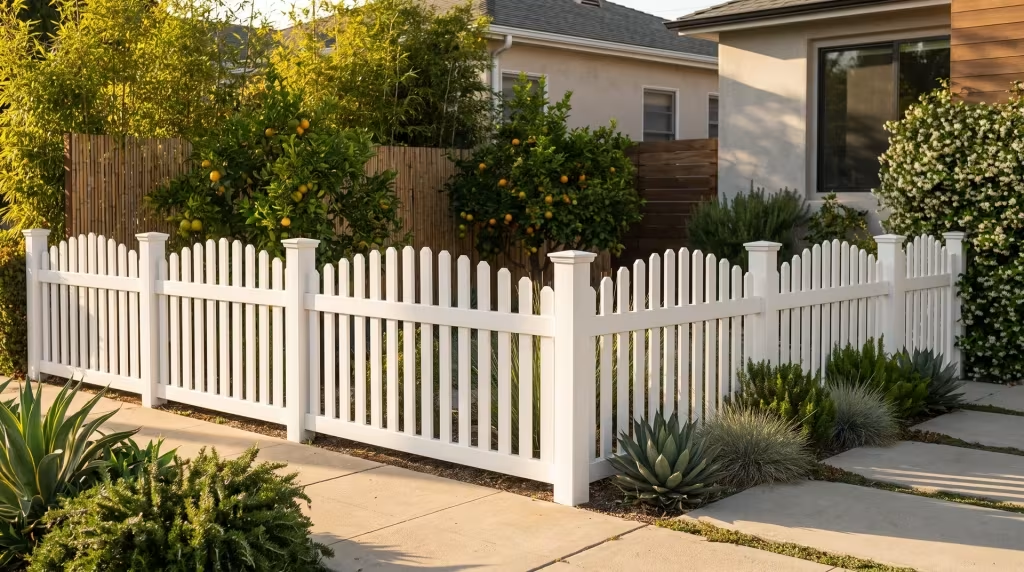
Closed-top pickets sit flush under a top rail for a finished, level line, with the gaps between boards left open.
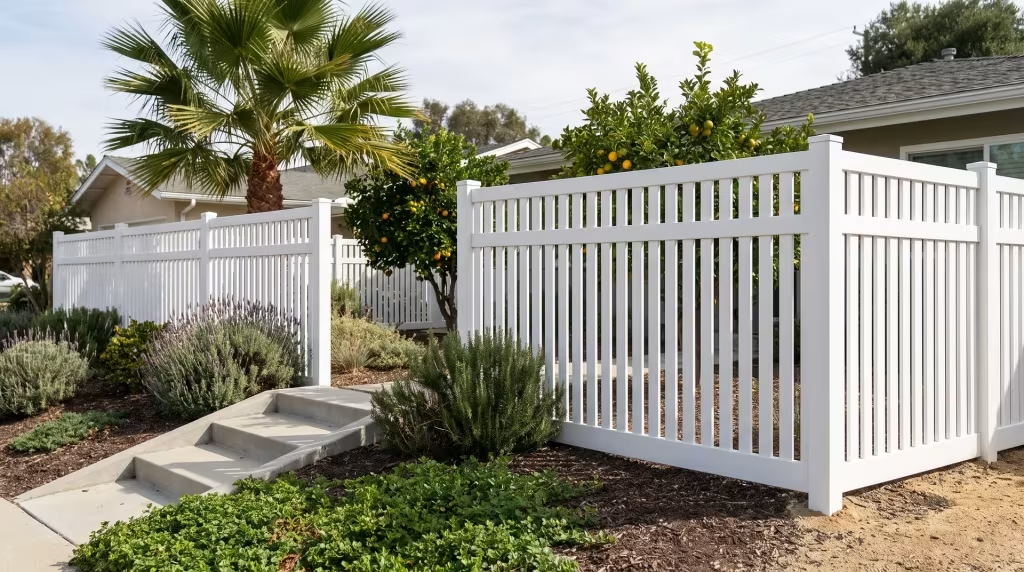
Dog-ear pickets run up through the top rail and stand exposed above it, each one wearing a molded cap.
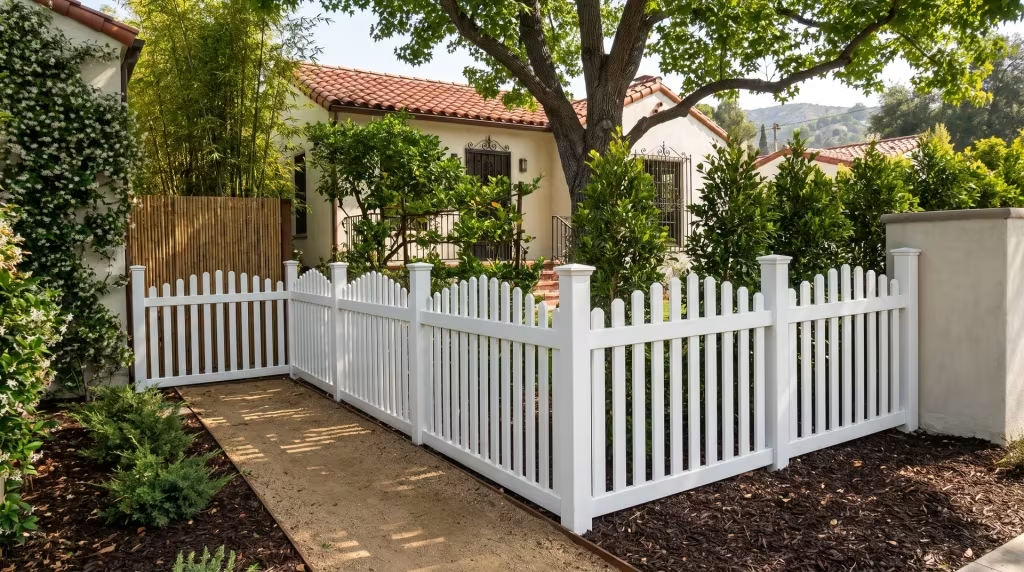
Horizontal pickets run flat boards side to side instead of standing upright, open enough for light and air to pass.
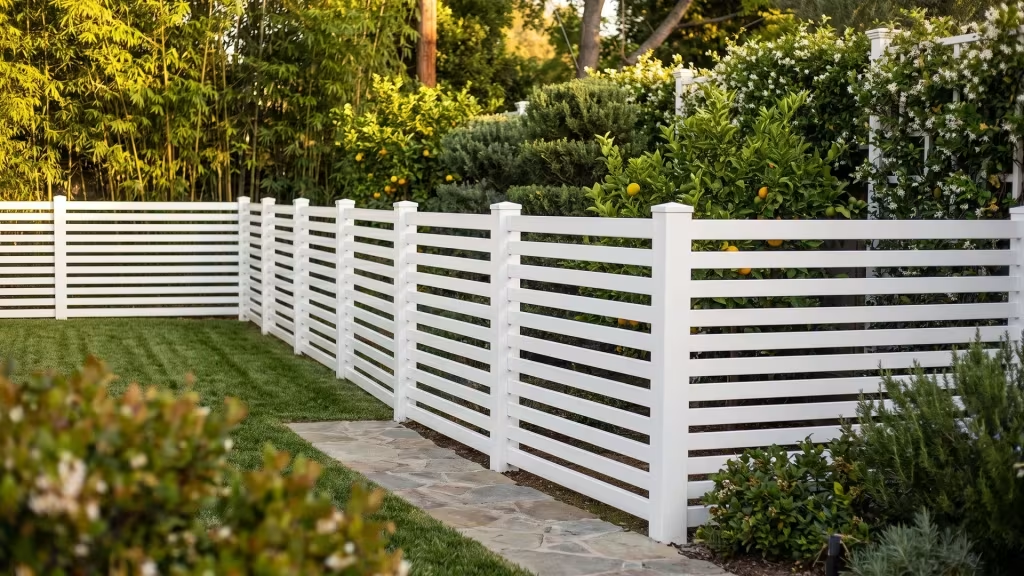
Straight picket tops hold level the whole way across the run, no dip at the center and no rise to a crown.
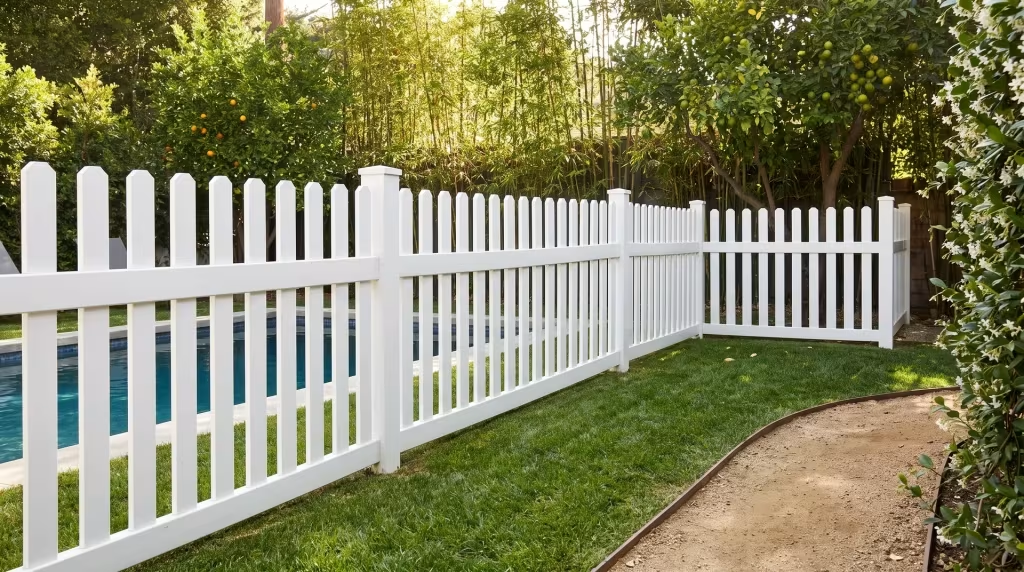
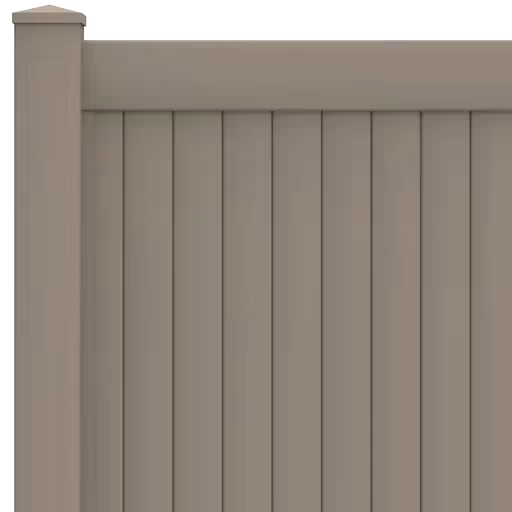
Pickets stand upright and stop clean at the top rail, the closed-top spacing behind the classic white-picket look.
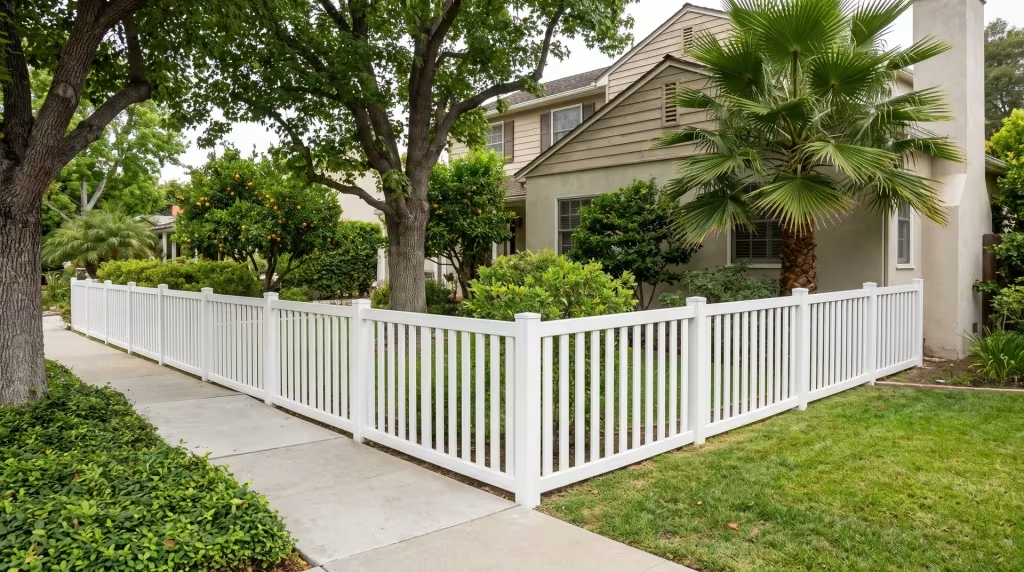
I had such a great experience with this company. Came out within two days of my inquiry. I has wall toppers, a side gate, and a main gate installed. Reasonable pricing and high quality work. Installation took two days, very clean crew, and a very professional installation.

Highly recommended company for your Vinyl fencing needs. This is the second time I have hired the company, and they handled it like pros from start to finish. Big thanks to David for laying out the perfect plan and following up on the execution.

Nairi recommendations and follow through were excellent. Gagik, the installer, assembled the fence with craftsmanship. Fantastic end result. The fence looks beautiful and a great enhancement to our backyard. We highly recommend Pro Vinyl Fencing.

Pro Vinyl Fencing is an incredible family owned business that uses excellent materials and are master craftsmen in vinyl creations. We are extremely pleased with their quality work and installation skills. We will call them again for our next vinyl project. The Stoker’s

A finished scallop usually reads best in a photo. Each one here our own crews measured, shaped, and raised for an owner across our two markets. Follow the top as it eases low through a section’s middle and lifts to the posts, then see how a White, Tan, or Clay run tends to wear the curve.
With a scalloped picket the front-yard cap steers the design, read at the posts since the middle scoops lower. In the City of Los Angeles that cap is 42 inches, Glendale four feet, with county and Ventura frontages in that same band. That cap shifts by city, so confirm yours locally before we build.
Bay Area scallops leave our shop cut to size and go up by our own crew. The by-right front-yard limit shifts by city: three feet in San Jose and in a solid San Francisco fence, three and a half in Oakland, four in Fremont. Rules vary by city, so verify the exact limit with the local building department.
A scalloped project runs a tidy path: since the scoop is cut picket by picket, the shaping tends to happen at the bench before a shovel goes in. You set height, color, and price on a same-business-day estimate, the scoop’s bench time built in.
Start to finish, one crew usually handles your scallop, from the opening measurement to the last latch hung.
A salesperson meets you on site, walks through height and color, and quotes the run; the scallop adds some bench time.
On paper before we start: the scallop run, height and color, gate count, and any tear-out, each line priced.
Posts go into concrete, the length-cut pickets and matching gate rise to the scoop, and the site is swept clean.
Vinyl gets a transferable limited lifetime warranty; workmanship is covered for a separate 5 years, plus a care guide.
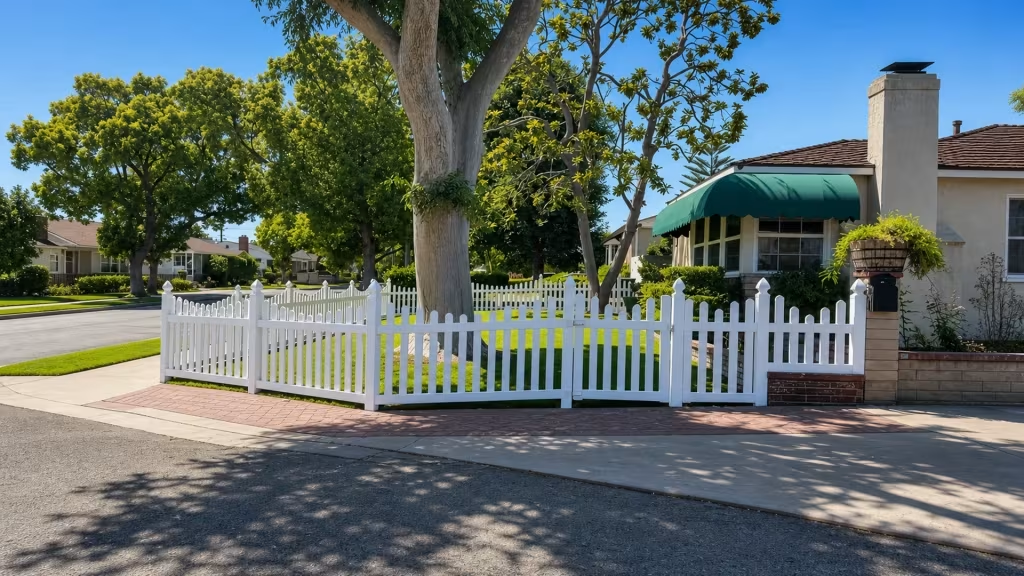
Field notes on picking a soft top that tends to suit a garden bed, and keeping white vinyl bright in summer.
Adding a picket topper brings real height and quiet to a block wall already in place, no demolition needed.
Fences blog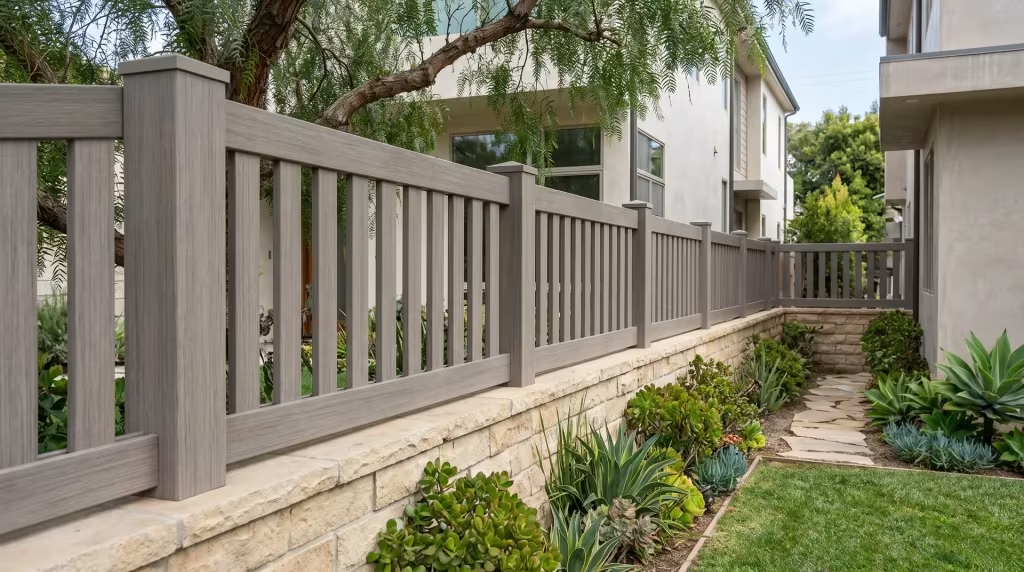
What buyers ask about a scalloped picket
A handful of questions settle a scalloped picket: what the scoop is, how it is cut, what sits opposite it, whether it is the privacy version, how the center dip plays with the height rule, and what nudges the cost. If yours is missing, ask the crew that would actually build it.
Picturing the scoop?
One free on-site visit puts a real number on your scalloped run.
A scalloped picket is a decorative, open fence: upright boards spaced along two rails, capped, with their heights stepped so the top line dips to a low center each section and lifts back to the posts.
In our Langford build it comes at 3.5 and 4 feet, in White, Tan, or Clay.
By varying the picket lengths. The boards sit tallest at the posts and get shorter toward the middle, so the capped line drops into an even scoop.
The top and bottom rails stay straight underneath, and only the picket heights shift to shape the dip, each board keeping its dog-ear cap.
That would be the arched top: the very same run-line curve turned the other way up. A scallop scoops down to a low center, an arch swells up to a high one, so each is the other flipped.
In feel they part ways too, the arch formal and standing tall, the scallop soft and cottage-like.
No. This is the open, decorative kind: spaced apart, the pickets let the view through. A scalloped crown over a solid screen is a different fence, a privacy panel we build on request.
And at 3.5 to 4 feet it stays under the state’s pool-barrier minimum of 60 inches, so it is no pool barrier either.
Not in the way code counts. The dip is decorative and the posts stay full height, so a city reads the run’s tall post line against the front-yard cap, while the low center only softens the look below it.
The scoop does not change the permit number, so confirm the cap with your city.
A little. Cutting every picket to its own length is more bench work than a plain straight or dog-ear top, so a scalloped run can sit a touch higher.
The bigger movers are run length, height, color, and gates. You get a firm number, free, at the yard, with zero-down Synchrony financing available.